Sunday, August 06, 2006

Chinooks


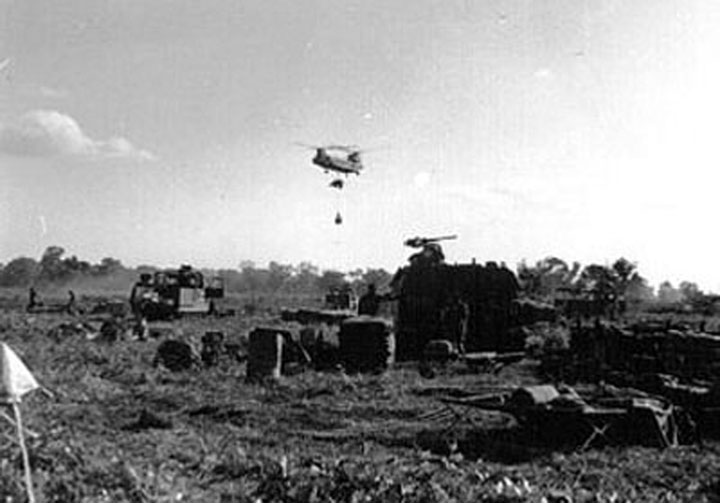
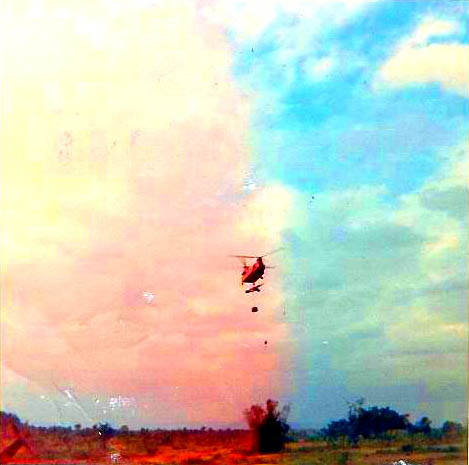
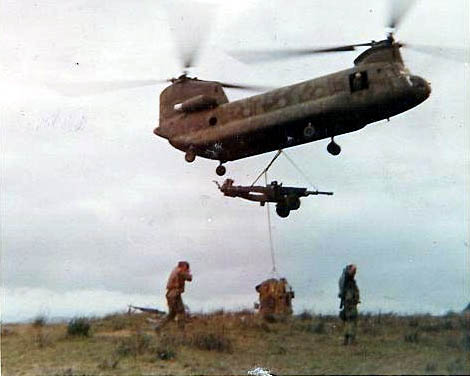
No Vietnam era 1st Cav solider blog or personal web page addressing Vietnam would be complete unless it includes photos of Chinooks. When it comes to transportation they were to us what horses were to 1st Cavalry troops when the division was formed in 1921 and what armor is for today’s 1st Cavalry soldiers. Chinooks were what we rode to battle.

These photos show what they looked like at work including one of my personal favorites, a picture I took within a few feet of one lifting off from LZ Pedro in February 1968. Even today some 30+ years later I can hear the “whomp, whomp, whomp” sound as the blades beat the air and feel the incredible downdraft as it lifted up and away.

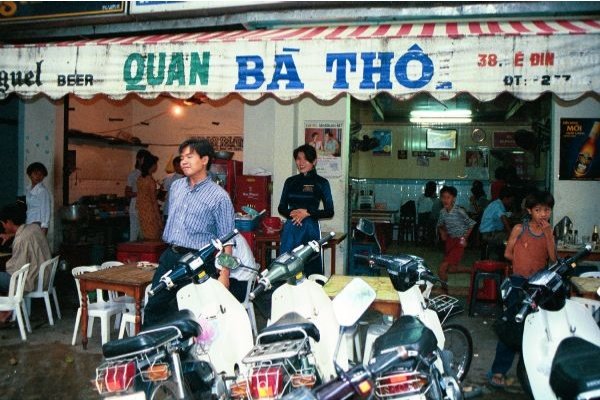
Quan Ba Tho Cafe, Da Nang


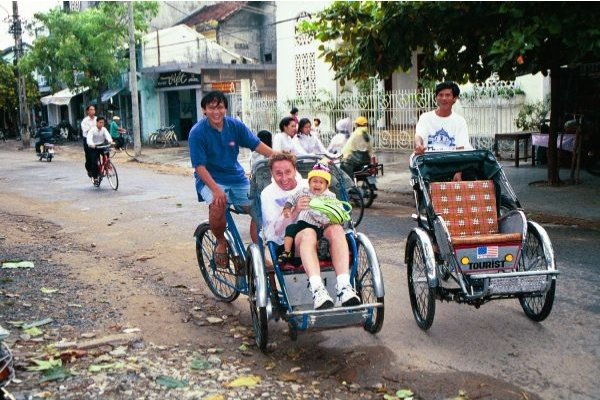
One of my favorite 1999 memories is of the Quan Ba Tho Café in Da Nang. There I spent a couple of hours with my guide Phuc and our two pedicab drivers, Cuoung and Otrang eating the largest grilled shrimp I have ever seen, drinking whiskey and beer, all for the unbelievable price of $12US.

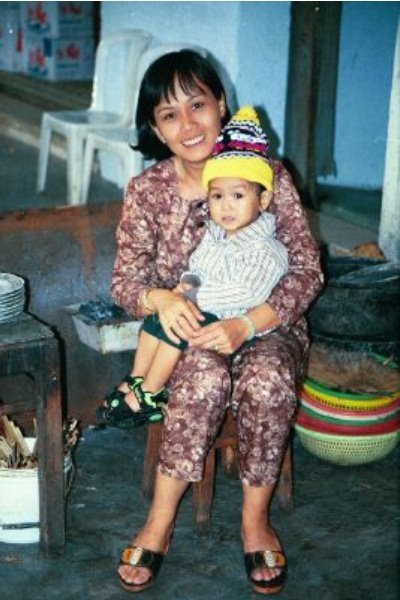
You also see our hostess, the café owner, along with her young son who was none too pleased to be sitting in my lap in the pedicab.


Saturday, August 05, 2006

Hoi An

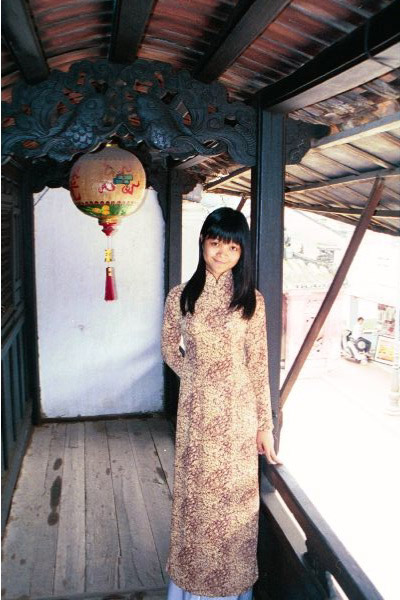
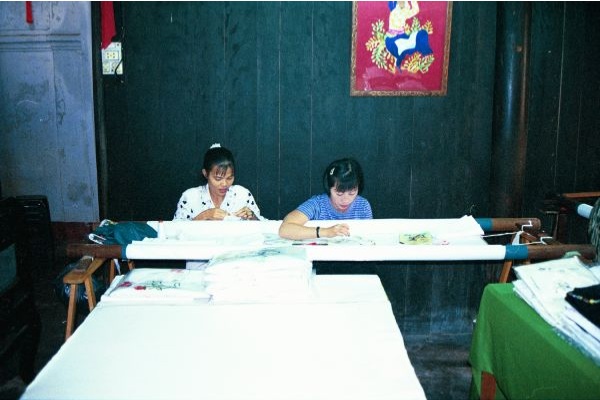
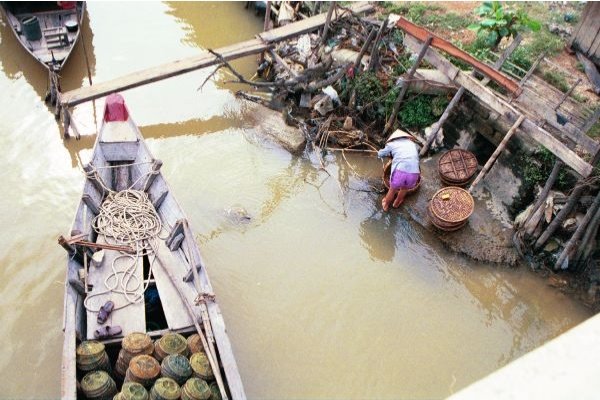
Hoi An. I didn’t even know it existed. Situated near Da Nang, it is a beautiful place similar to the artsy towns that dot both coasts in the US. From what I was told it was largely untouched by the war, which is amazing if true given its proximity to Da Nang. As an aside, I was originally supposed to stay in Da Nang and in fact checked into a hotel there. However after discovering Hoi An, I checked myself out telling the desk clerk that I would meet my guide the next morning in the lobby, and moved to a small hotel in Hoi An. With that done I began to explore returning to my hotel to shower and change before dinner. Much to my surprise there was my very worried looking guide along with three police all of whom immediately wanted to know why I had moved. As it turns out, my passport had been registered with the police (standard policy for westerners) at the previous hotel with an indication that I would be staying the night. When I abruptly changed my itinerary, they went looking for Phuc and then as a group, for me. Changing plans like that without the authorities knowing in advance is frowned upon. These pictures show only a portion of the beauty. Narrow alleys leading to unexpected surprises such as this café where I sat outside enjoying a delicious lunch of fish, rice with a glass of wine (from where I have no idea. All the better on this trip of discovery.) Watching the sun go down across the Bon River with the fishing fleet at anchor. Wonderfully peaceful.
Road to Quang Tri


Da Nang and definitely Hoi An were well worth the trip to the middle county but my visit there was about getting to Quang Tri Province. This was where I spent most of my time during the war and where I would find whatever information was available regarding Dolly (see "Dolly" post).

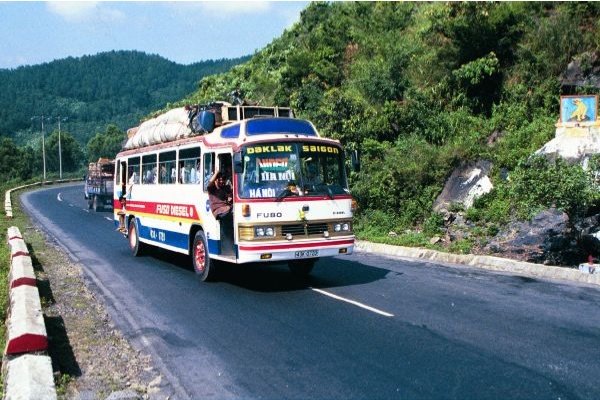
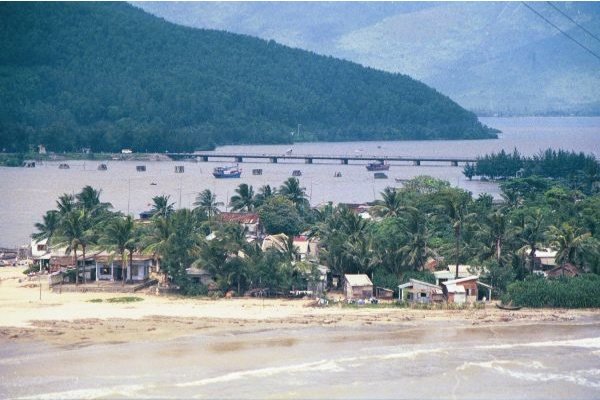
These pictures show some of the trip to Dong Ha including the Hoi Van Pass and Lang Co Beach, unfortunately, no doubt, headed towards Maui style development at some point in the future.

Friday, August 04, 2006

Dong Ha


I spent one night in Dong Ha, which is decidedly not a western tourist destination. However it was convenient for the next day drive east on the infamous Route 9 towards the Laotian boarder and my visit to Khe Sahn.

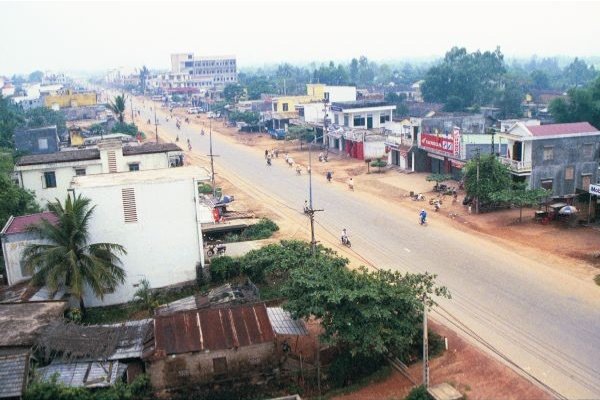
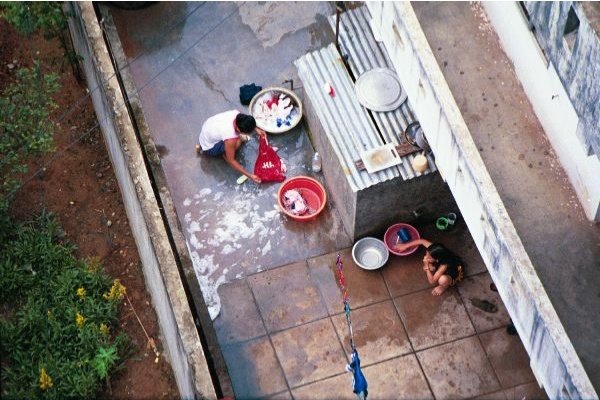
These pictures include a view of the main street in Dong Ha taken from my hotel window, along with one in the room and the courtyard below.

It was, by central Vietnam standards, a very nice hotel however most westerners would probably be a bit uncomfortable. No sheets on the bed and large numbers of mosquitoes which were controlled to a point by a contingent of geckos hanging out in the shower, along with a can of bug spray the desk clerk gave me when I checked in.

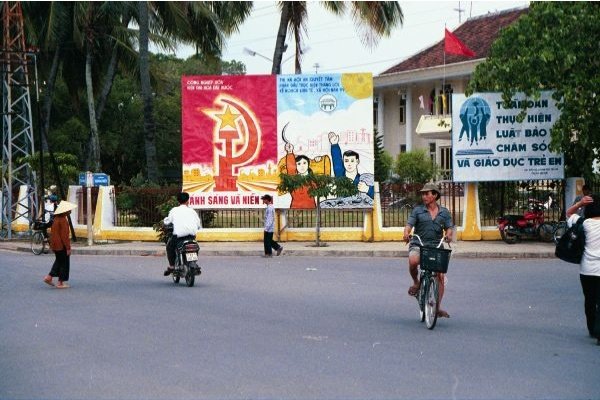
Finally, around 10 PM an amplified Vietnamese voice began screaming God only knows what. There were megaphone speakers on poles near the hotel so the local Communist government could preach to the people. My guide Phuc explained the next morning that was simply the standard propaganda and that likely few other than me even bothered to listen. I couldn’t understand a word of it.

Wednesday, August 02, 2006

I Corp Area


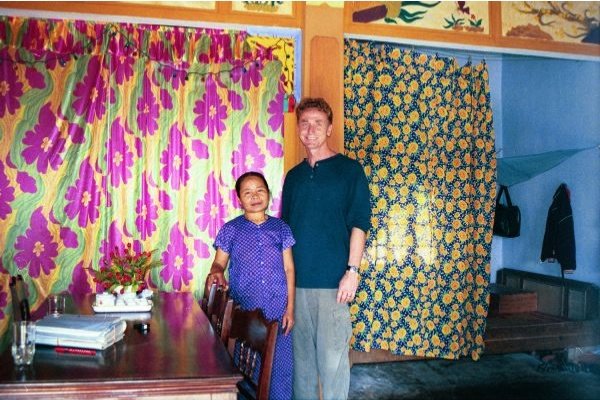
Thirty-one years ago these scenes would either never have happened (me in this woman’s home near what was LZ Jane) or I would have been too scared to have appreciated the beauty.

Question for any Marines who may be reading this. What is the name of the pile of rocks silhouetted by the sun? (Hint: Reread the last sentence.)

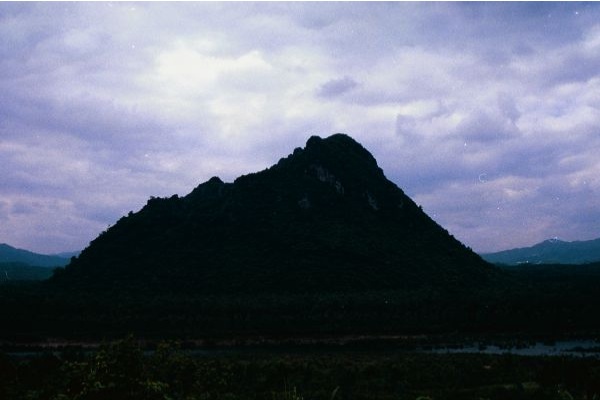
The “Rock Pile” just east of Khe Sahn near Con Tien. Semper Fi

Monday, July 24, 2006

Quang Tri


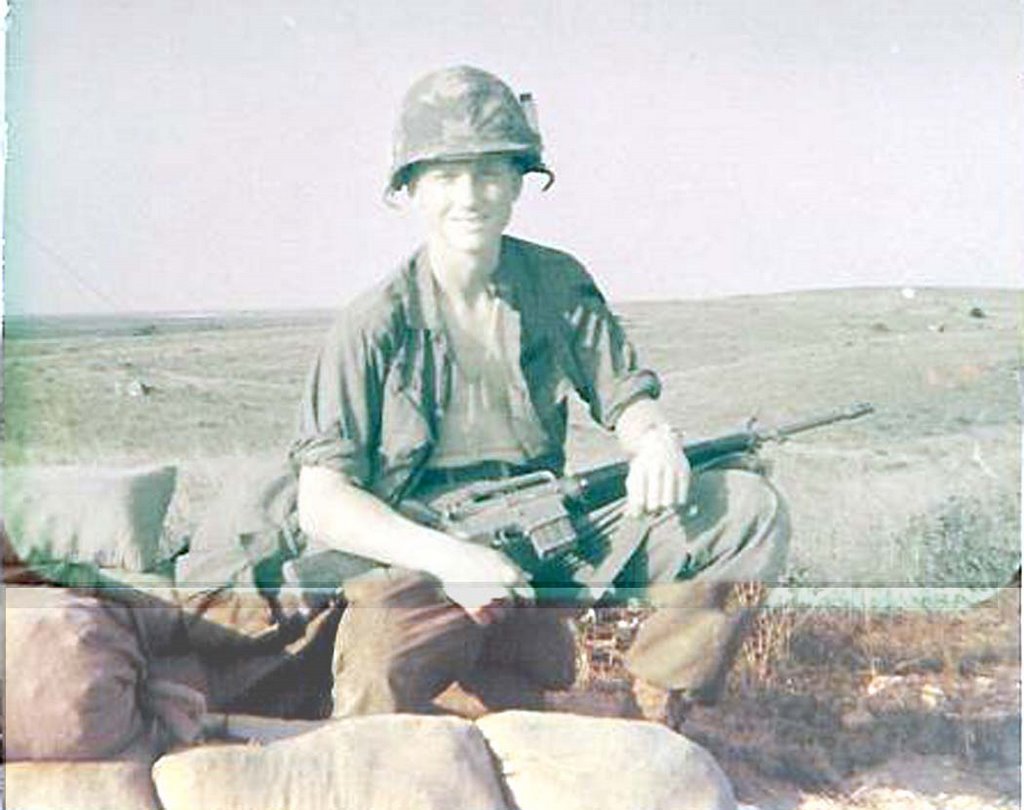
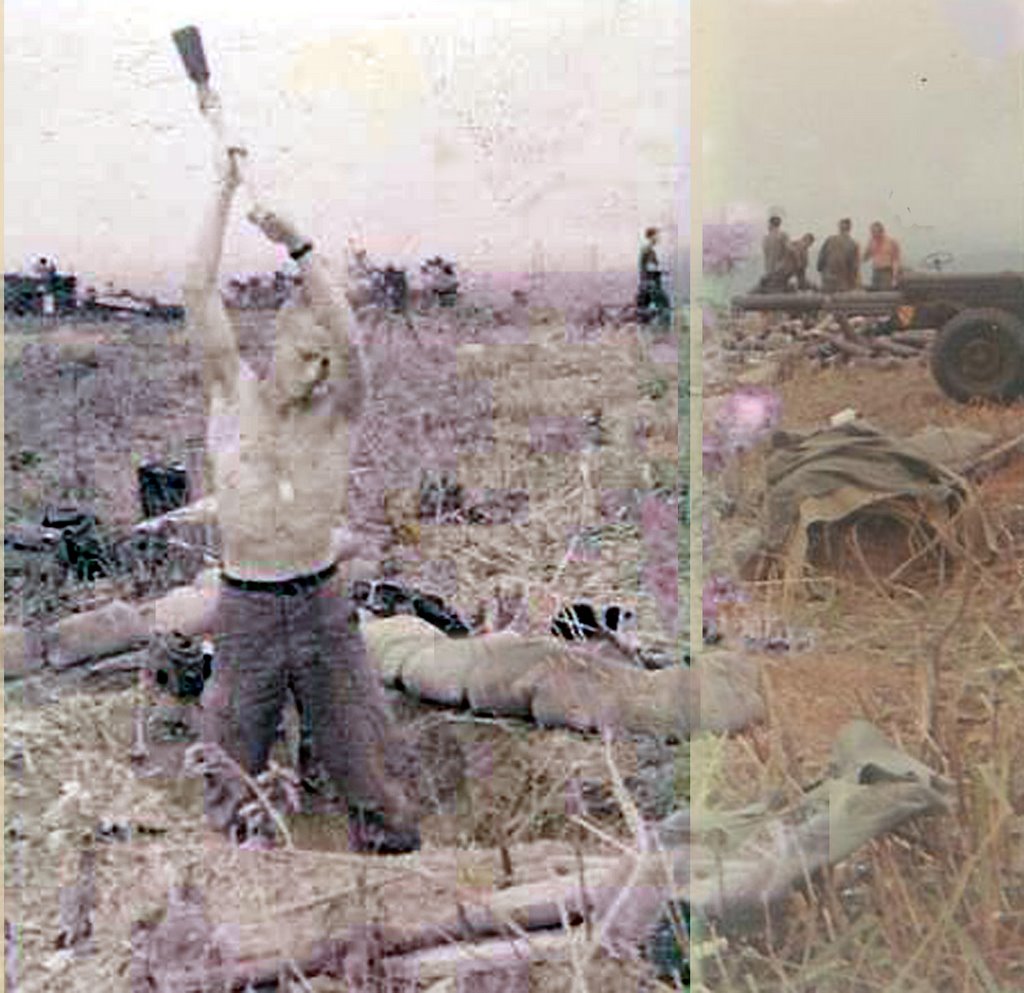
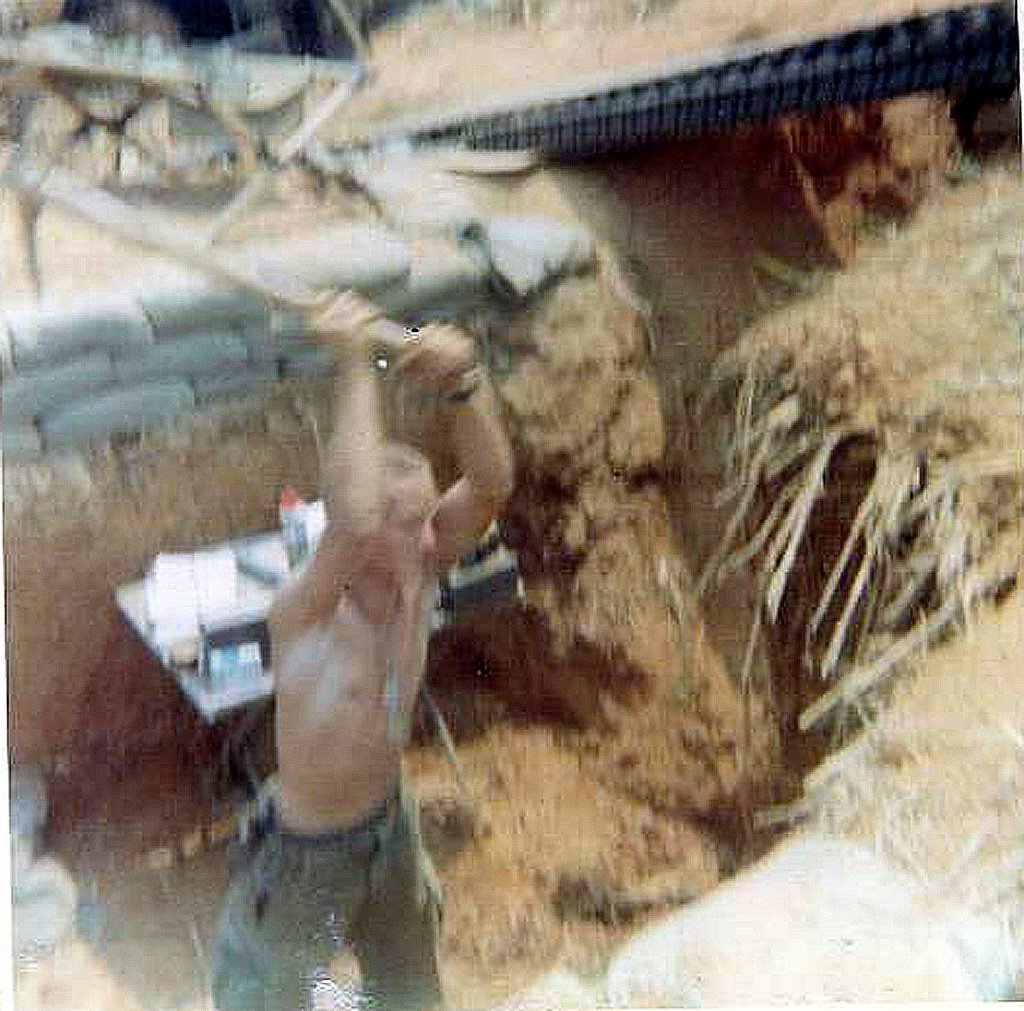
Quang Tri is just inland from the South China Sea and a few miles south of the DMZ in I Corp. Once the division moved up there from An Khe, we spent a considerable amount of time out on fire bases called “Suzie”, “Pedro” and “Jane” as you see pictured here. In 1999 I went back and with my guide and the help of a man who had been a VC mortar commander during the war, found what had been LZ (Landing Zone) Jane.

I can’t honestly say things looked familiar or actually that I could prove it was Jane. It “felt” like Jane but that could be because I wanted it to. Nothing of my war year was recognizable because my time was either in the field or in an area the Army built for its own use. No time in the cities.

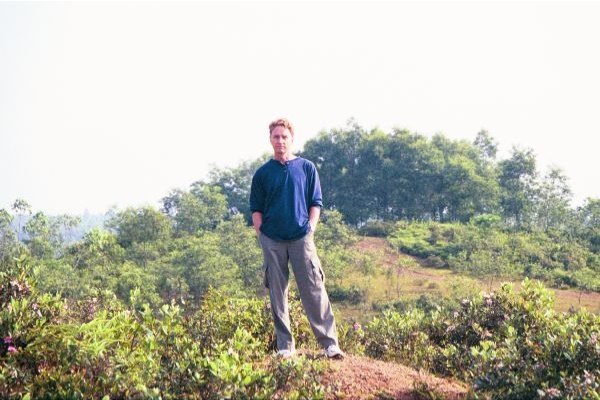
However at worst these “before” (1968) and “after” (1999) pictures were taken within a few miles of each other if not on the exact spot, which my ex-VC new friend insisted was the case (he said he mortared us on more than one occasion.) And, of course, the pictures of me are exactly that.

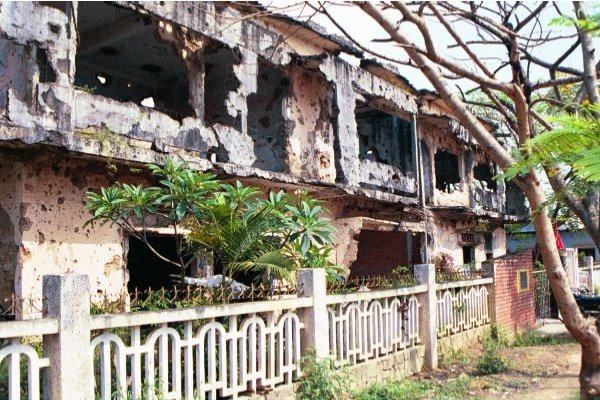
Note the pocked marked building. This was a school house in Quang Tri City. Two years after the 1st Cav was ordered south, the VC/NVA overran the area and this building is an example of how bad things became. Really sad.


Friday, July 21, 2006

Khe Sahn

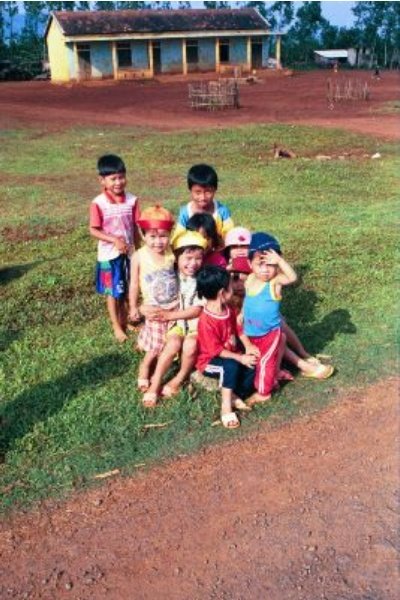
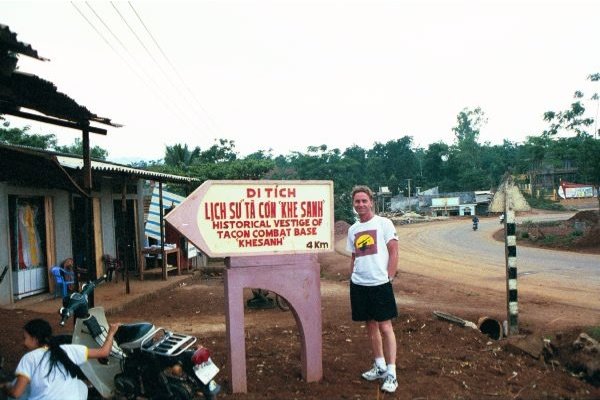
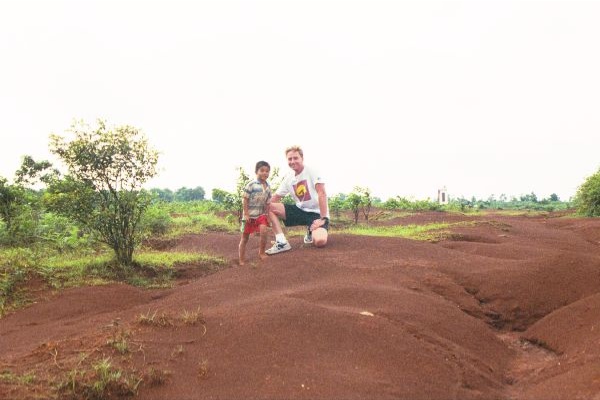
The battle for Khe Sahn was interesting because it ended a non event relative to what might have been. Situated near the Laotian boarder, a major route south for the North Vietnamese Army, it became a “must win” symbol for both sides. The 26th Marines and select Army Special Forces units such as those at Lang Vei had endured and returned a tremendous amount of punishment centered on what was to become a historic remote outpost in the most north/eastern corner of the country. In the end over 40,000 NVA/VC facing 15,000 1st Cav and Marines. Their numbers against our firepower. Beginning in mid March 1968 ending in mid April, the final toll for the 1st Cav was 59 KIA, 250 wounded and 5 MIA (this did not include Marine or South Vietnamese causalities) against a confirmed 638 NVA/VC killed. The expected decisive battle never came, likely because the other side realized they would be beaten. As suddenly as it began it was over and we were off to air assault A Shau Valley. The accompanying pictures of the kids are at a school within 5 km of the former firebase. Pictured with me is one who took me the last 200 or so yards to the very spot I had been some 27 years before he was born. This is why I came. All in contrast to the dark days of 1968 when we were all digging in for whatever lay ahead. Replace dark memories of soldiers with color images of kids. How great is that? And then in 1999 I return to a pastoral landscape devoid of everything. No indication of the siege the Marines endured, our positions, nothing. It’s as if we had never been there and I can't think of a better legacy.

Wednesday, July 19, 2006

Tet 1968: The Citadel

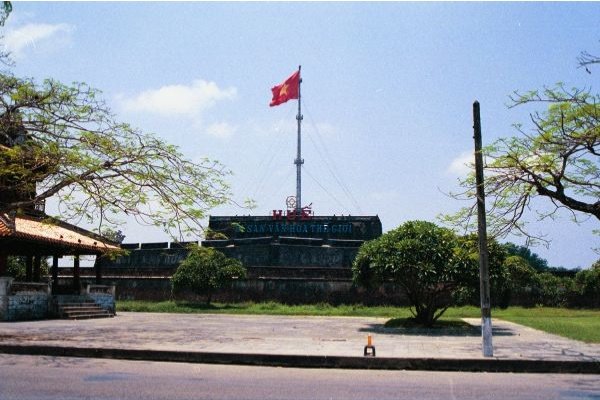
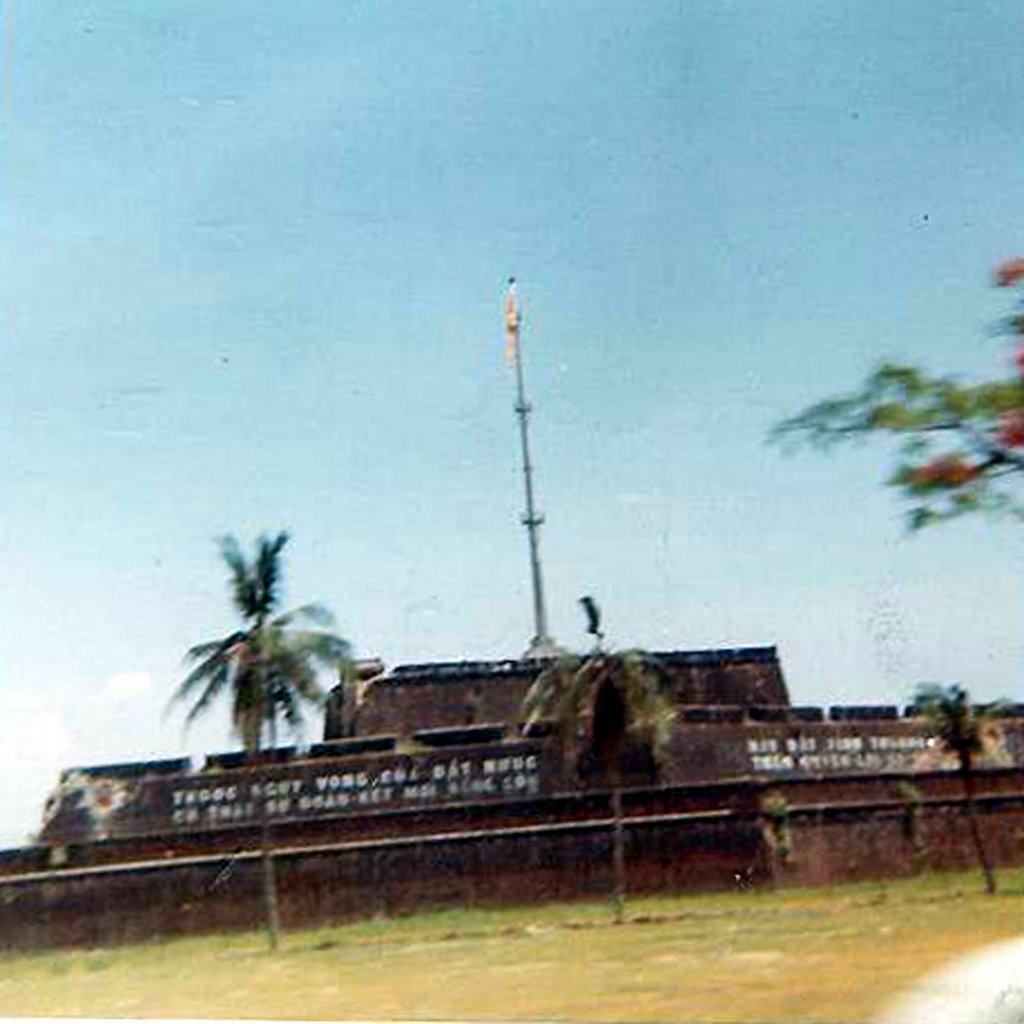
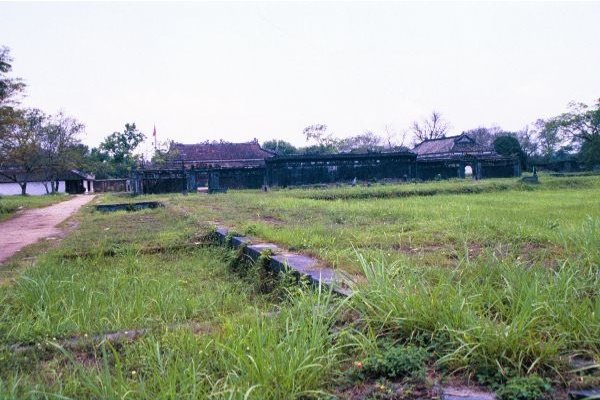
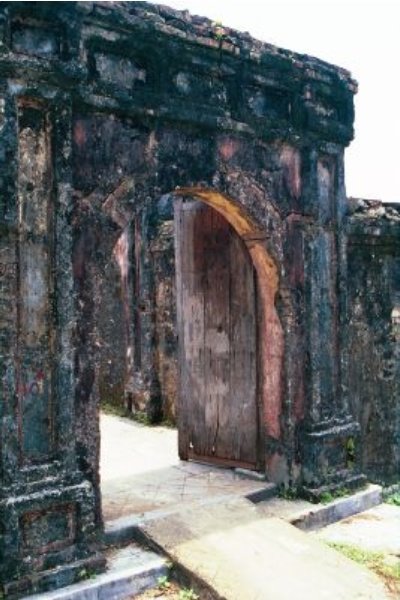
Another must stop for anyone seeing more than just Saigon and Hanoi is Hue, the ancient imperial capital of Vietnam. I was interested for that reason and because I was there during Tet 1968. The palace is now a ruin, in part due to normal wear and tear over the centuries, WW2 and the fighting during the 1968 Tet Offensive. The Communists used it as a base and as a result the grounds suffered immensely due to the fighting. Anyone familiar with South East Asia and/or part of Georgia for that matter will know about Cicada, the grasshopper like bug that emerges each 17 years to live a short but incredibly loud life. They were on the Citadel grounds when I was there and there is no way I can over state how loud they were. Loud enough to cause me to cover my ears. Note the two pictures of the Citadel; one with a flag and one without. I took both some 31 years apart although quite by accident. I found the 1968 photo among my war pictures only after returning from the 1999 trip . Pure serendipity. Or does it qualify as deja vu if I was actually there??

Perfume River

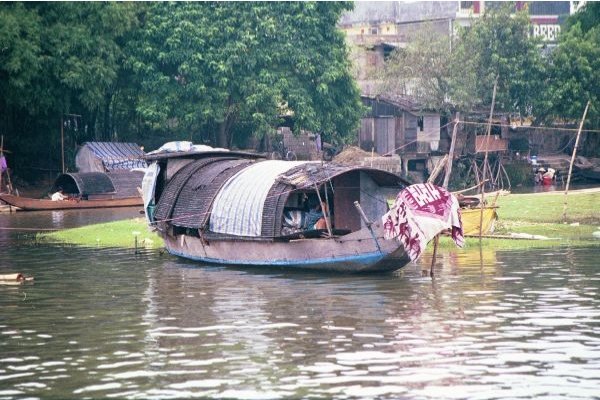
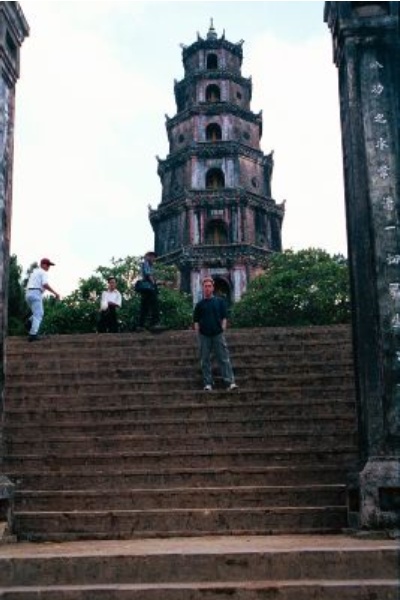
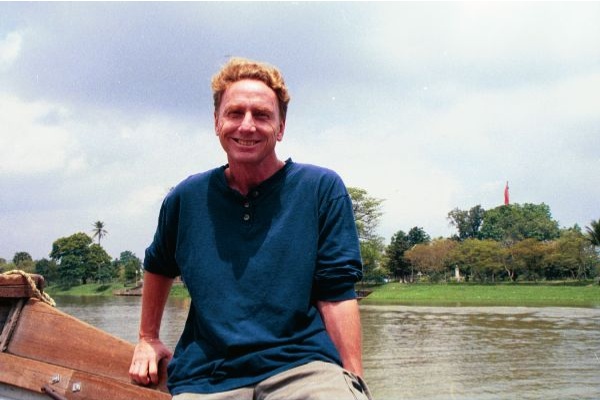
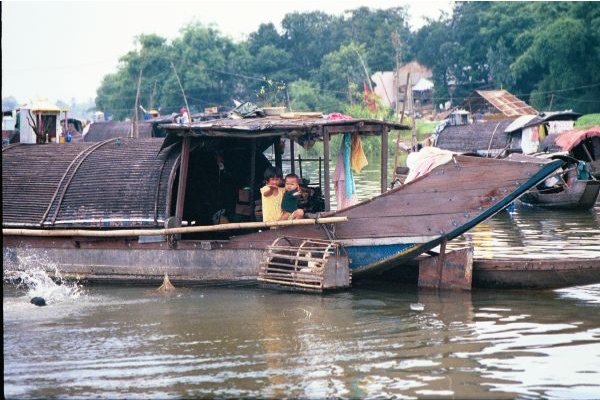
These pictures were taken on the Perfume River near the Citadel. Those people you see on the boat, and countless others like them, live their entire lives on the river on those boats. I cannot even begin to imagine what that would be like. Also at the river’s edge is the Thieu Mu Pagoda, a beautiful structure and grounds about 5km from Hue City. Built in 1601 and heavily damaged during WW2, it is still a major tourist attraction today.