Sunday, August 27, 2006

The Point


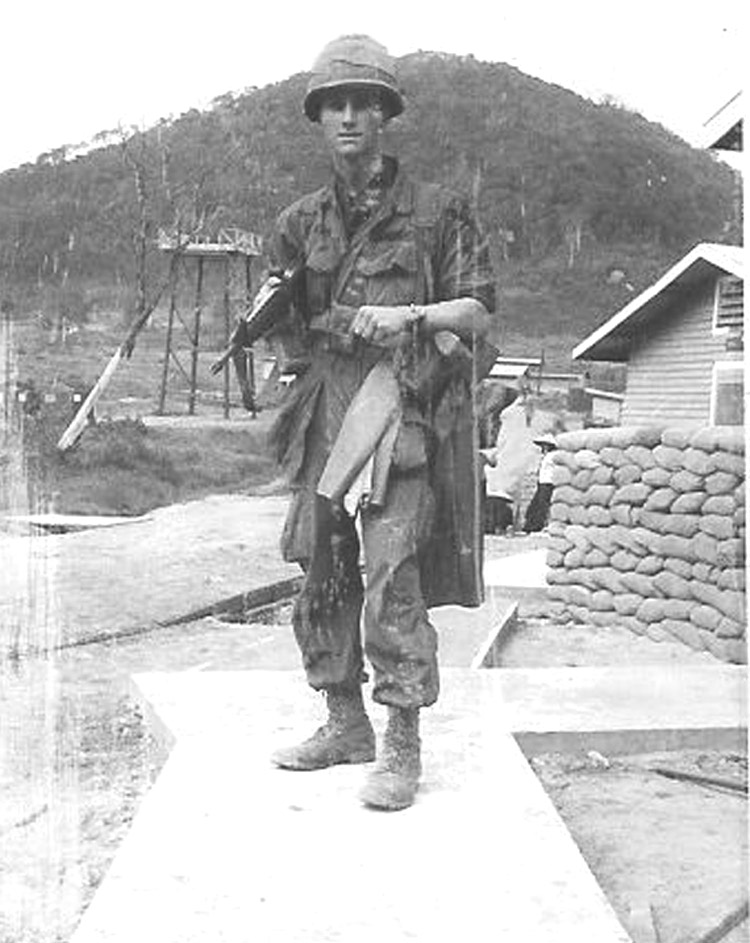
This is not a war story. While I was in the Vietnam war, I want this to be more about Vietnam the country, contrasting what it was like for me in 1968 versus when I spent three weeks there in 1999.

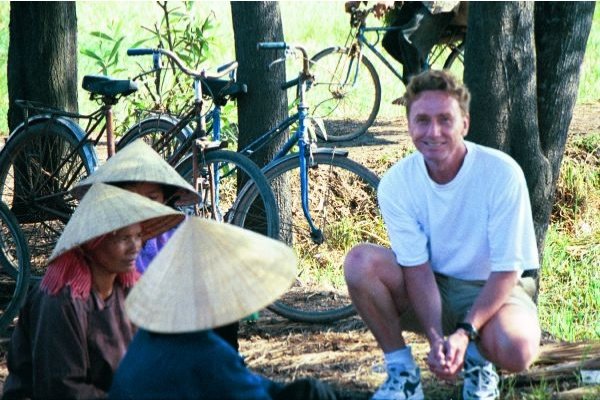
The point of the second trip was to create what I think of as “color memories” to replace the “black and white” war memories I had held in the intervening 30 plus years. As all who have visited Vietnam will attest, it is a beautiful country as are its people and it deserves to be remembered for that beauty rather than the ugliness of more than 25 years of war against the French and later the Americans.

I also went back hoping to find what happened to a young girl who became my friend and probably saved my life one day in Quang Tri. An almost hopeless quest with more chance of finding the proverbial needle in a haystack but something I needed to attempt nonetheless.

Was I successful?

Yes and no just as with most things in life.

The Beginning


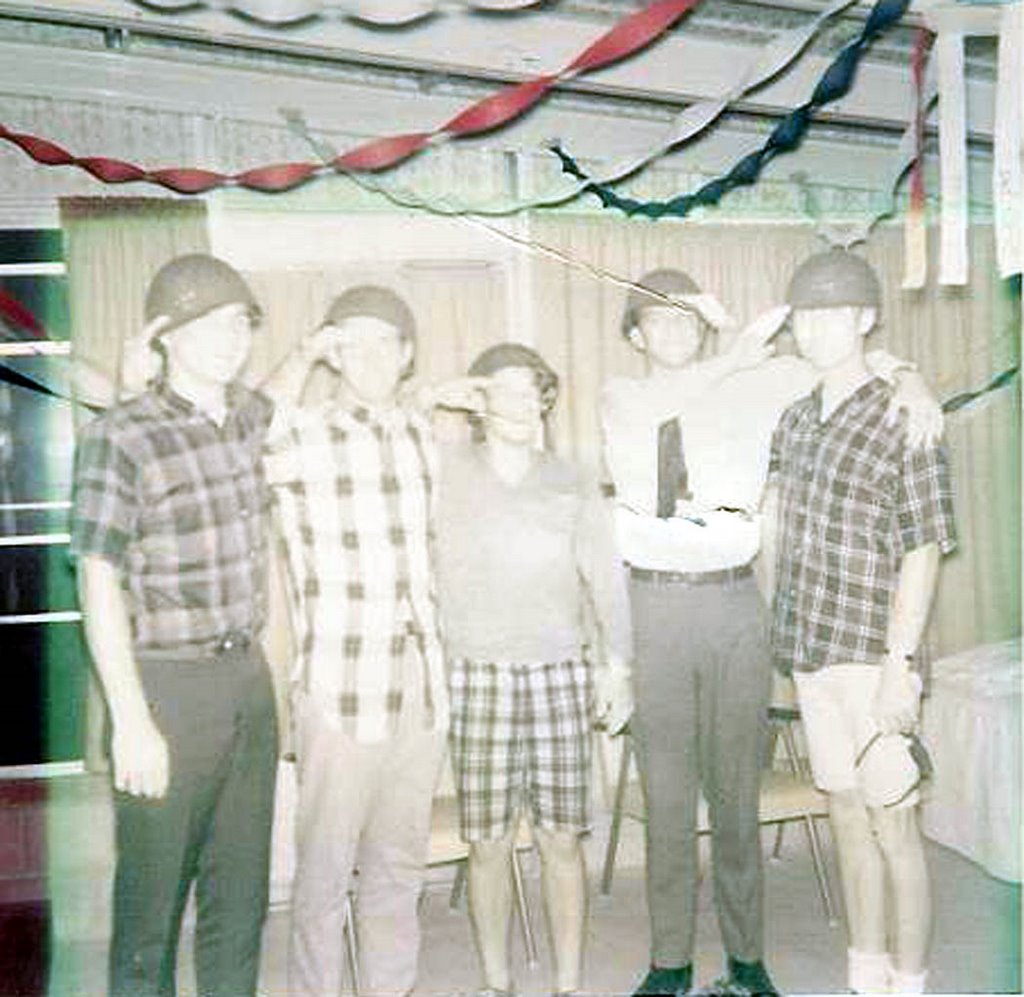
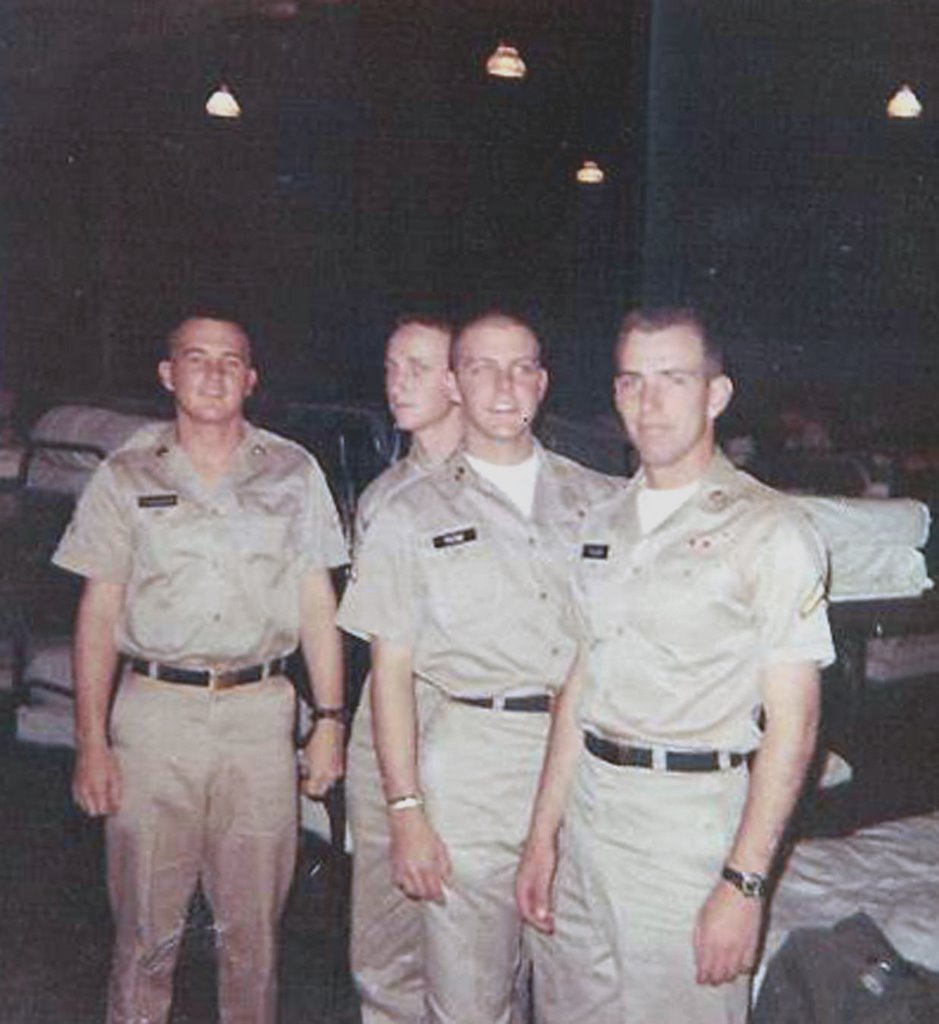
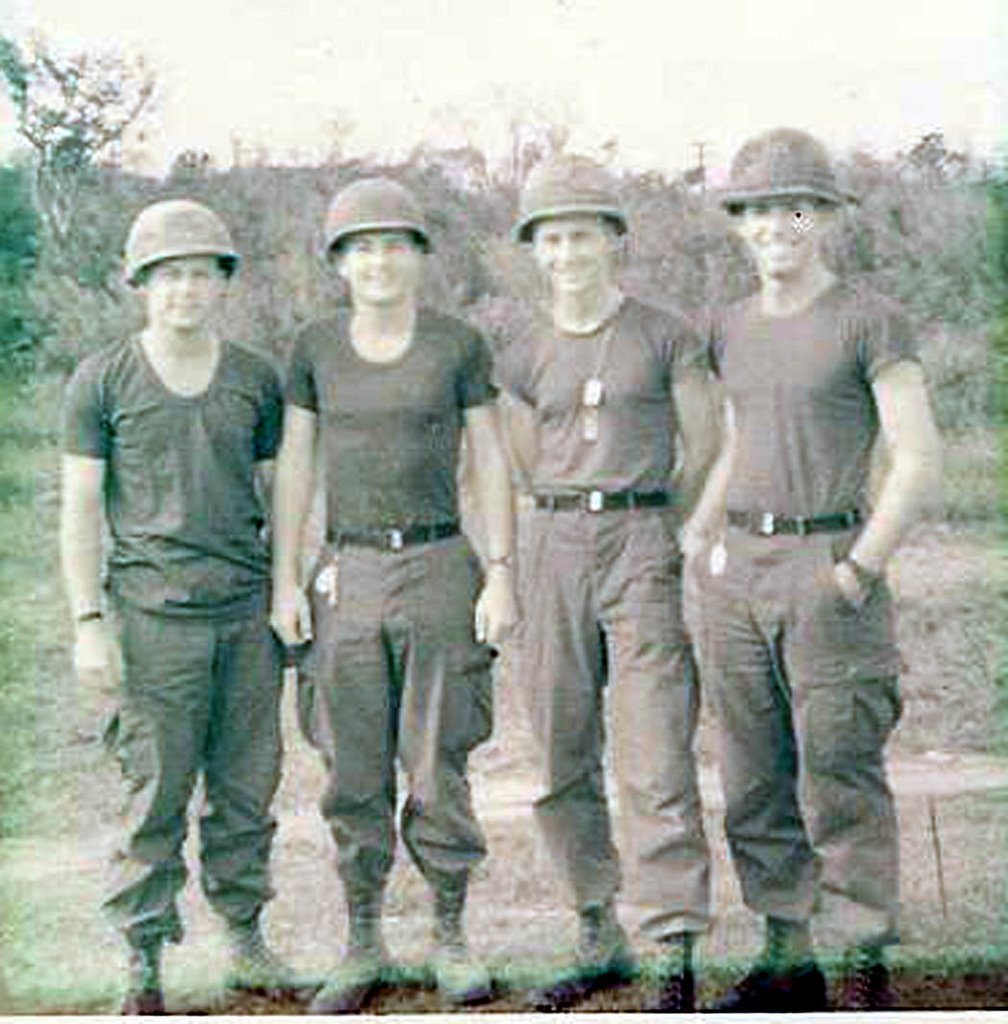
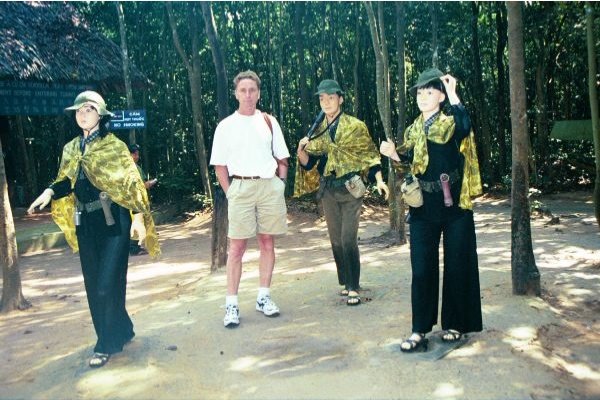
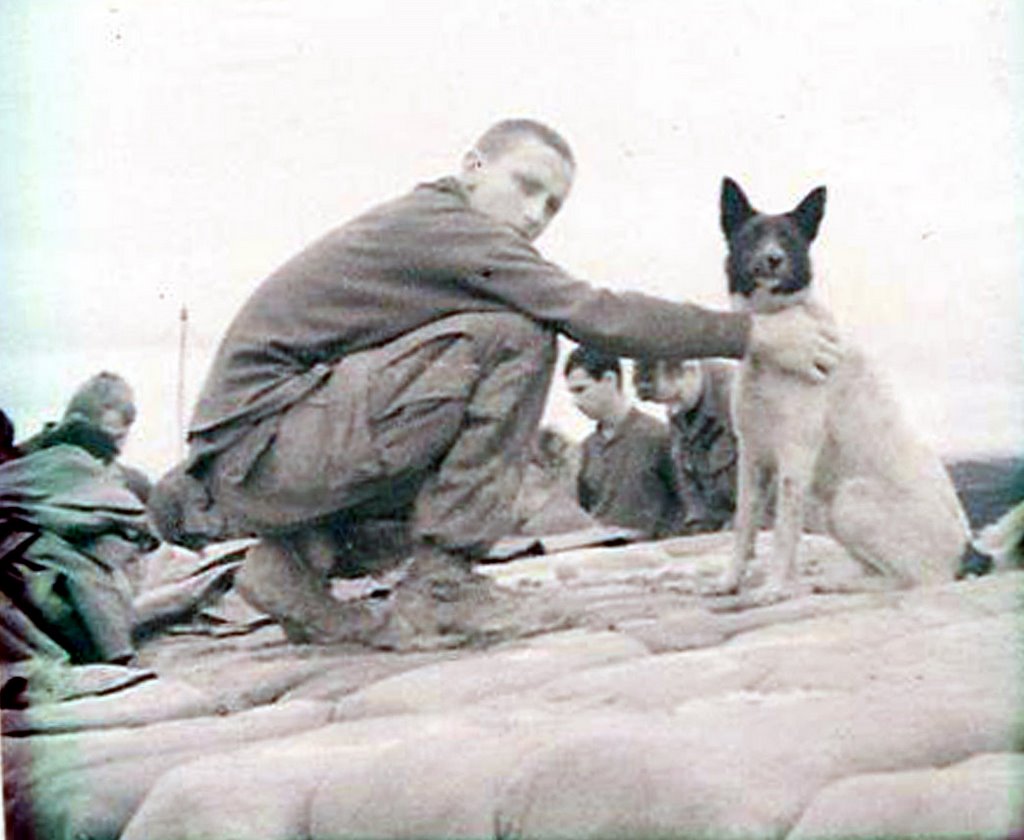
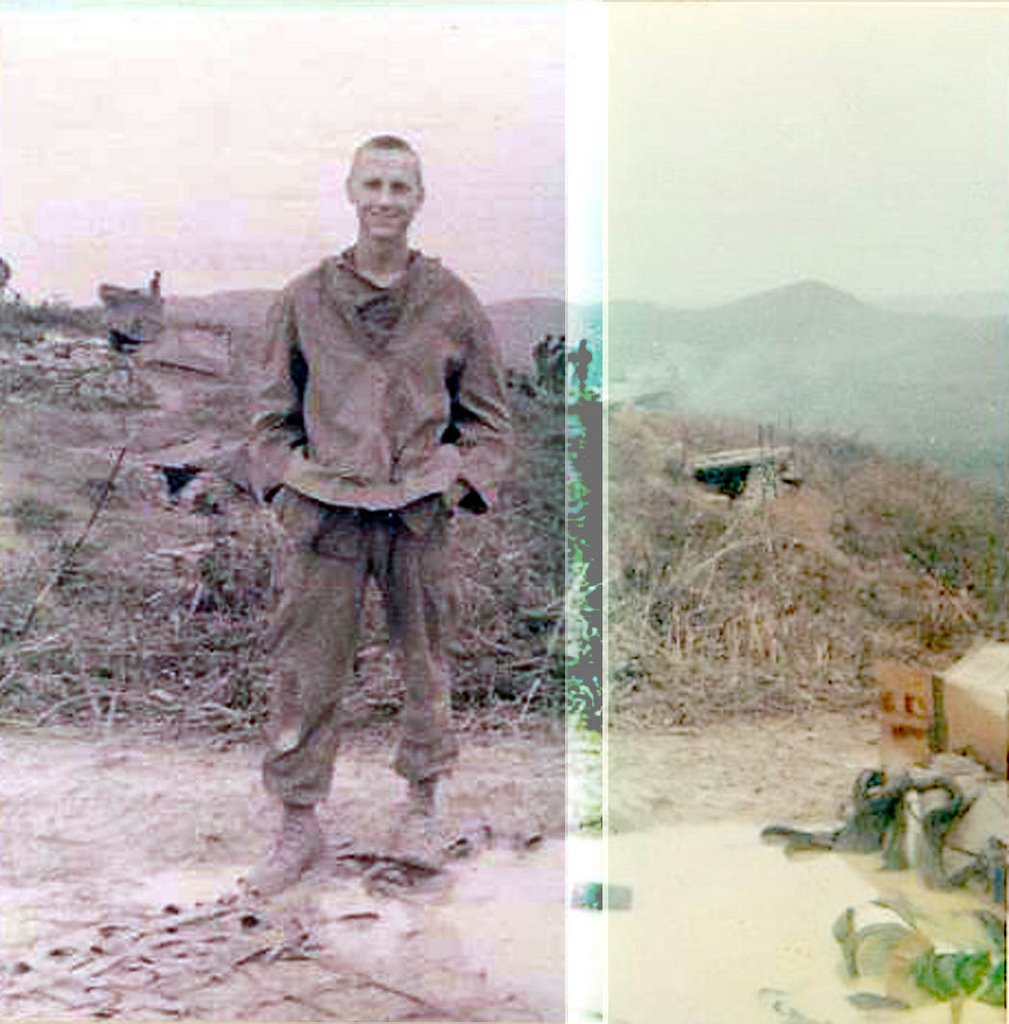
We were four (also pictured is Dave in the center who got to Vietnam a few months after the rest of us) adventurous Southern California boys who, as all like us in the mid to late 60’s, were confronted by the reality of the Vietnam War. Basically the choices were go to college full time with a draft deferment, get drafted without a deferment or enlist. We chose the latter and within less than 6 months of our first day in the Army, found ourselves in Vietnam.

We enlisted under the “buddy” plan guaranteeing we would stay together through basic training, which for us, was at Ft. Bliss Texas (a misnomer if there ever was one.) After basic we all went to artillery school at Ft. Sill Oklahoma. Once that was complete we volunteered for Vietnam however that is not as noble as it might first seem. In 1967 if you were in one of Army’s combat arms (infantry, armor, artillery) you were almost certain to go to Vietnam.

We were assigned to the 199th Light Infantry which at the time (December 1967) was operating near Saigon. However when we got in country, all our orders were changed to B Battery, 2nd Battalion/19th Airborne Artillery, 1st Calvary Division, then located mid country in An Khe. The battery had been overrun a few months before suffering 50% casualties and needed replacements immediately. What are the odds? Four of us from the same city and schools, friends since 6th grade, now all together in a unit in Vietnam with less than 30 guys total.

We were happy to stay together however that later became a double edge sword when Steve was killed 6 months to the day we arrived. That day we all grew up immediately and the war and being in the Army ceased to be an adventure. Now it was brutally real.

Saturday, August 26, 2006

Saigon


During the war my only exposure to Saigon was the Saigon docks after a trip up the Saigon River before being loaded onto Army buses which took us to an area where we boarded helicopters heading back to the field. No sightseeing trip this.

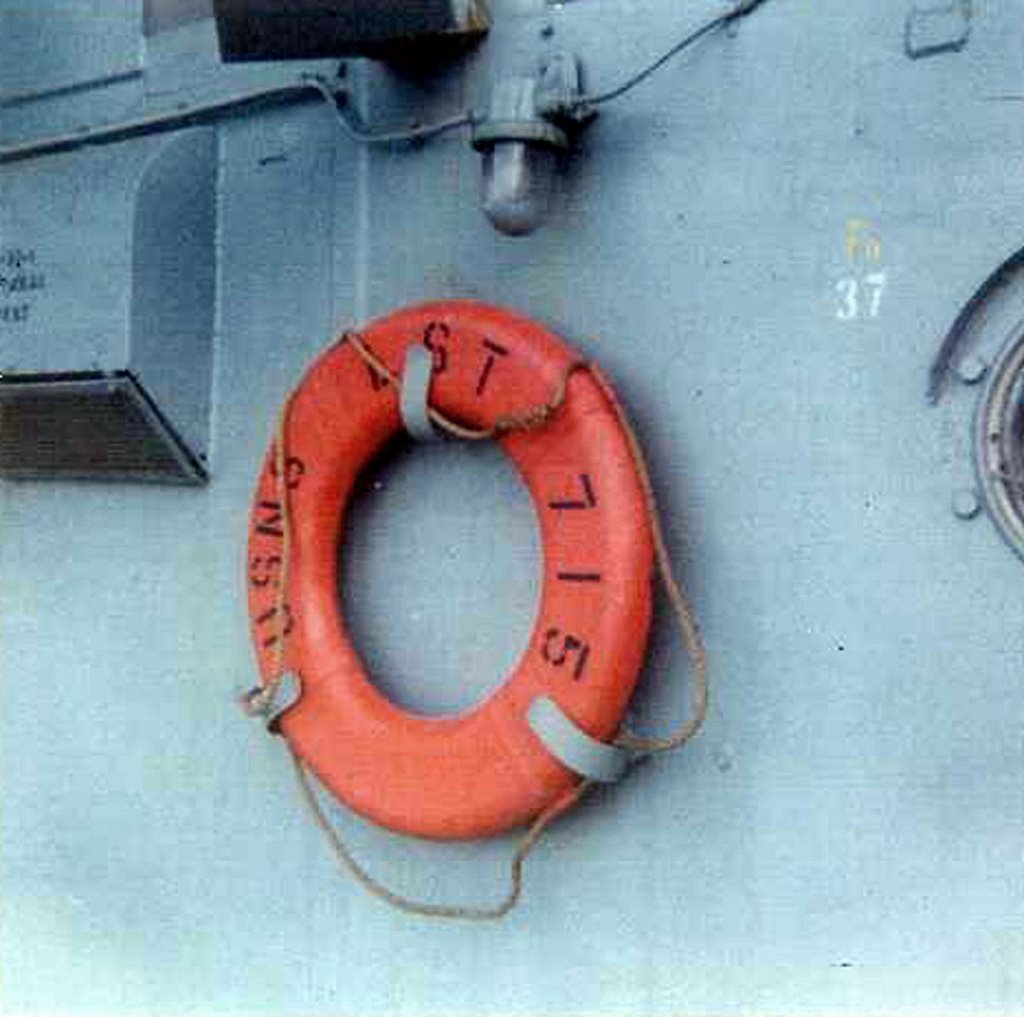
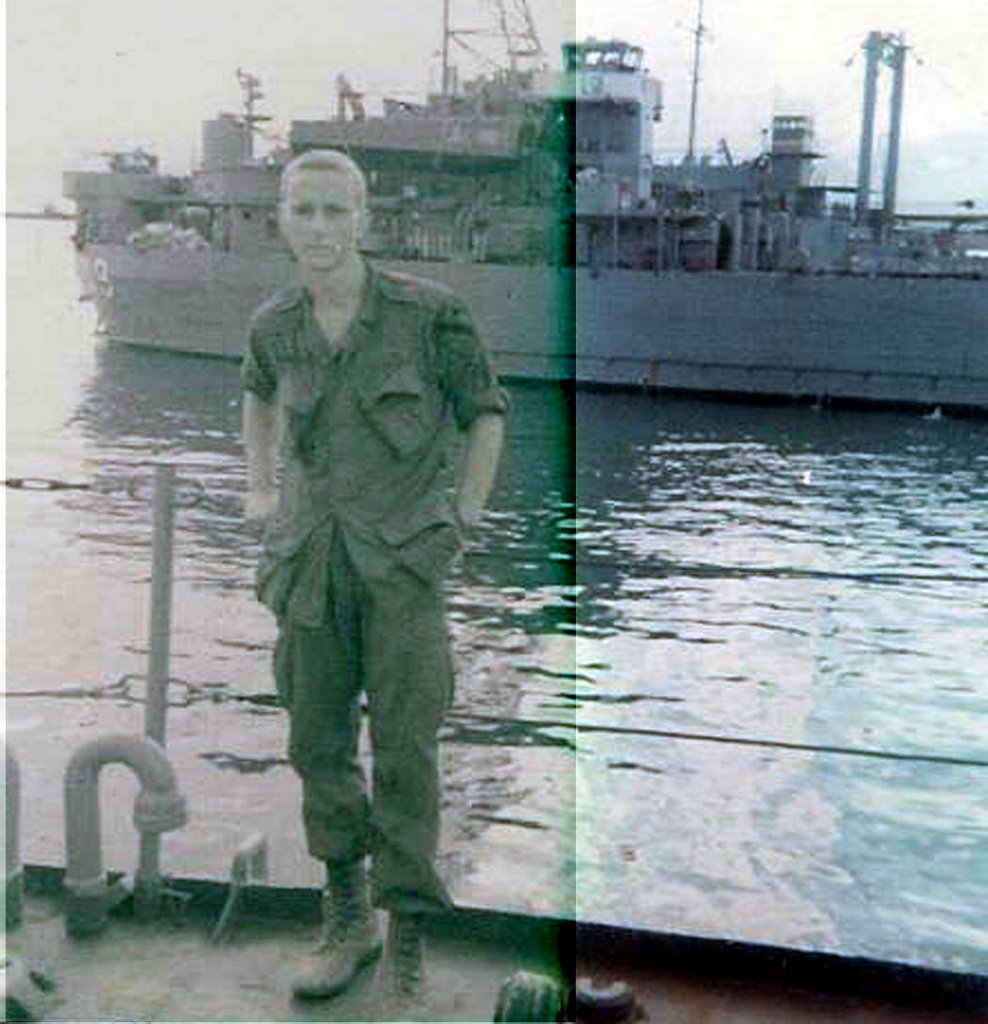
After 10 months of my year tour, the 1st Cav was pulled from I Corp just south of the DMZ and sent south to deal with the growing VC/NVA problem in Binh Duong, Hau Nghia, Bien Hoa, Binh Long, Phuoc Long, Tay Ninh Provinces all the way to Cambodia. While many of the division including Ron and Tom, flew down, I spent 5 days on Navy ship LST 715 heading south until we reached the Saigon River. A vacation really.

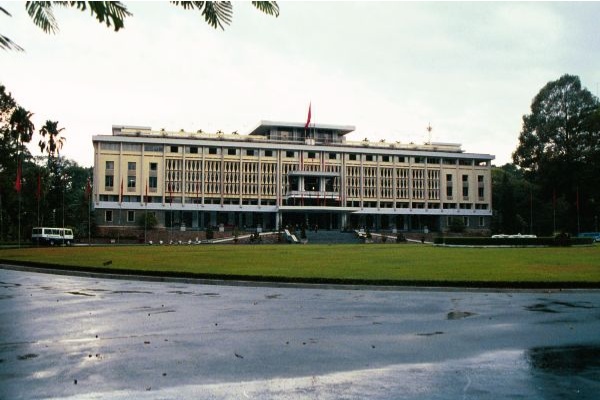
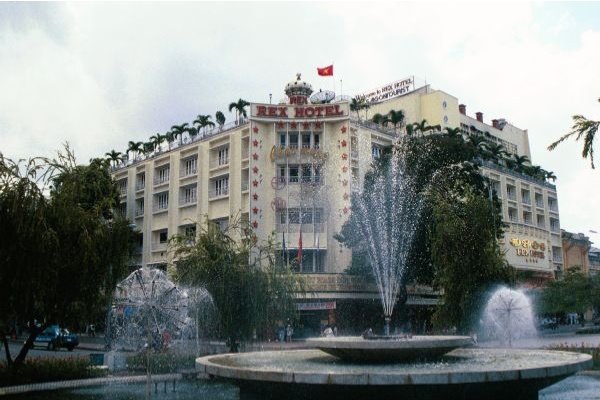
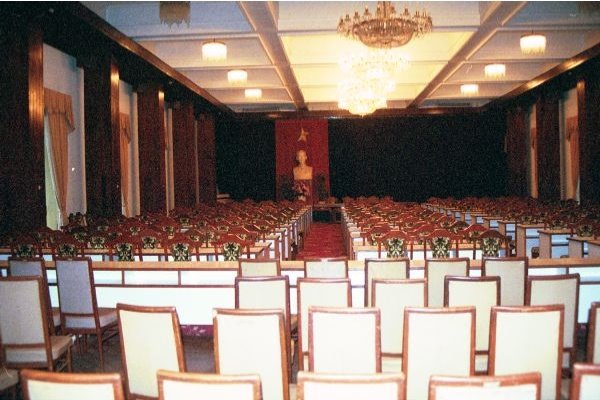
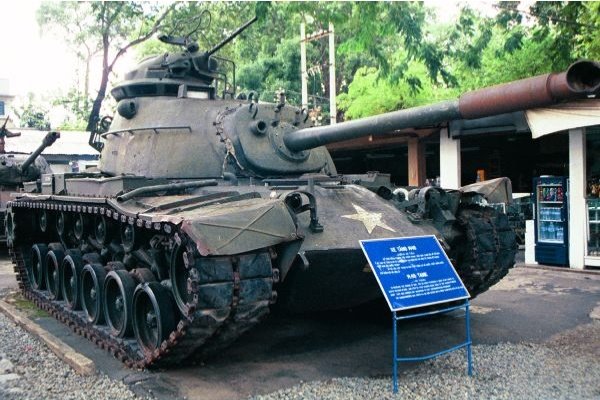
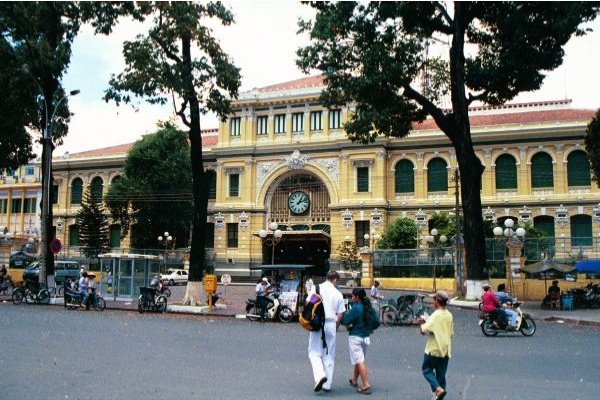
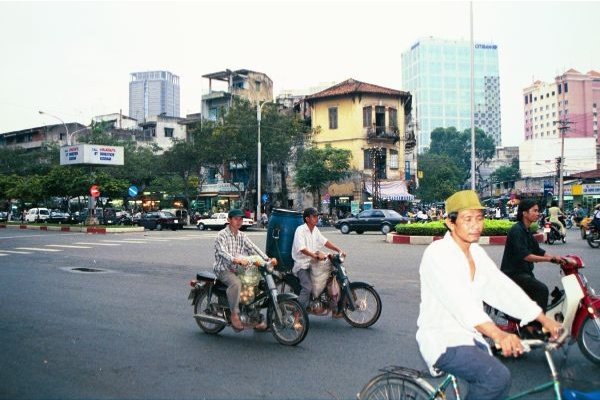
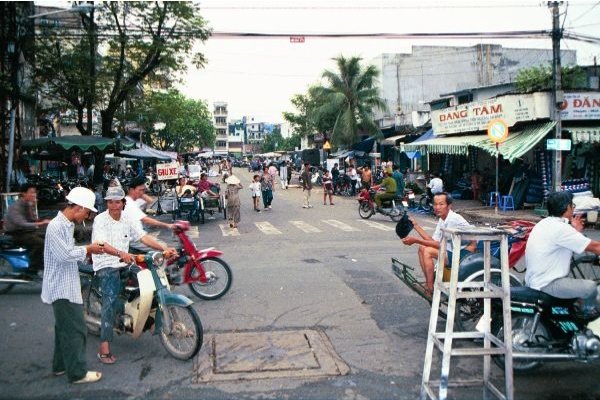
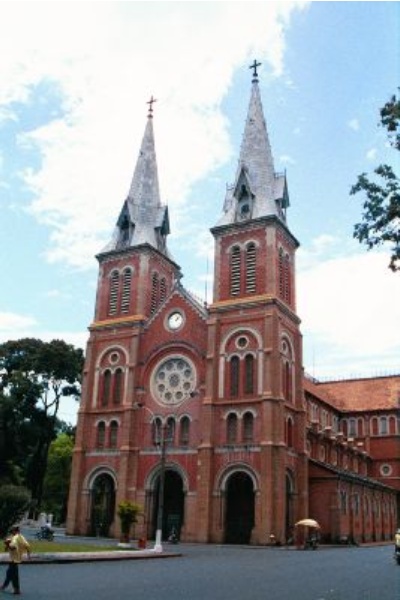
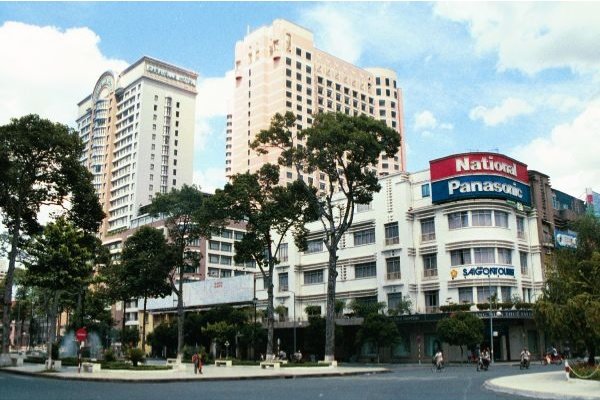
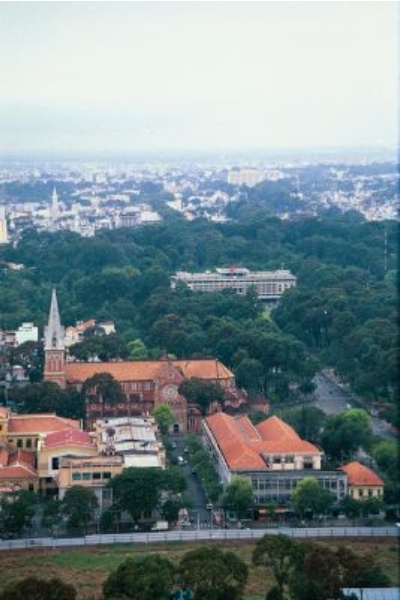
These pictures are of what I didn’t see including some famous locations such as the Presidential Palace, Saigon’s Notre Dame Cathedral, the Saigon Post Office the Caravelle and Rex Hotels, home to many of the press covering the war in and around Saigon. Also pictured is the NVA tank that allegedly was the first to enter the grounds of what was then the Presidential Palace. I say allegedly because I came across another in Hanoi that was also purported to have been the first.

Sneaky Commies. Anything for the tourists.

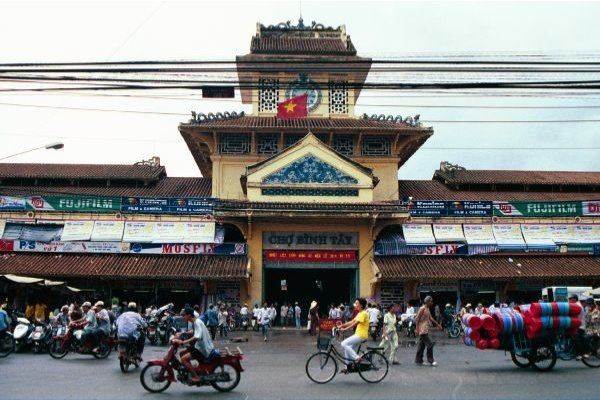
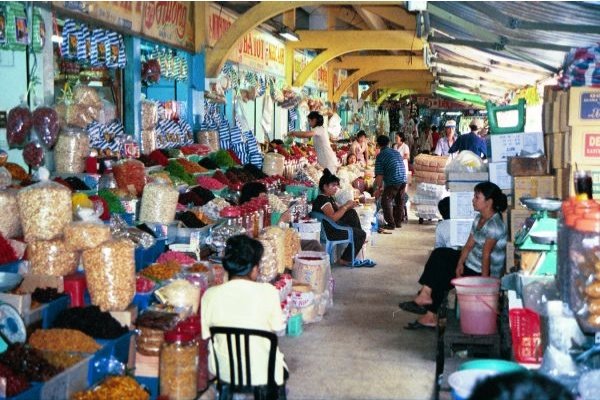
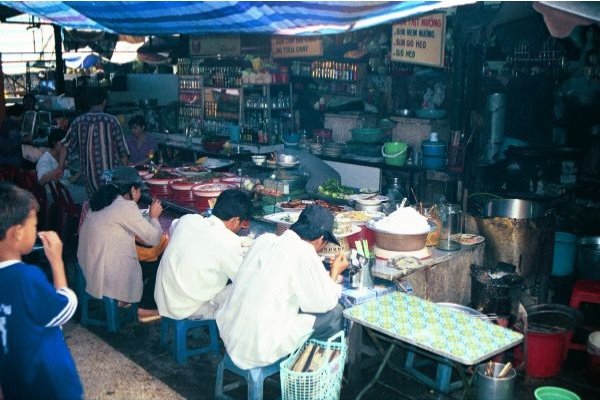
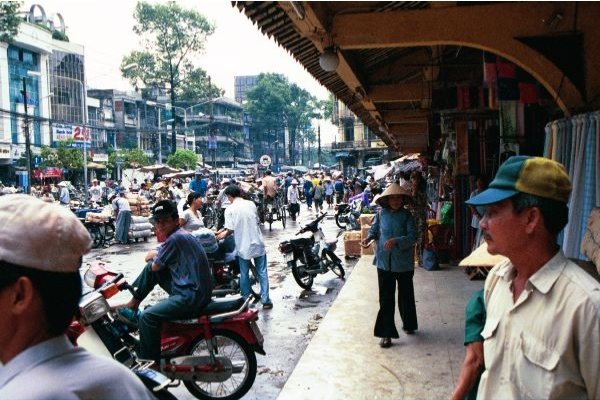
Saigon Shops


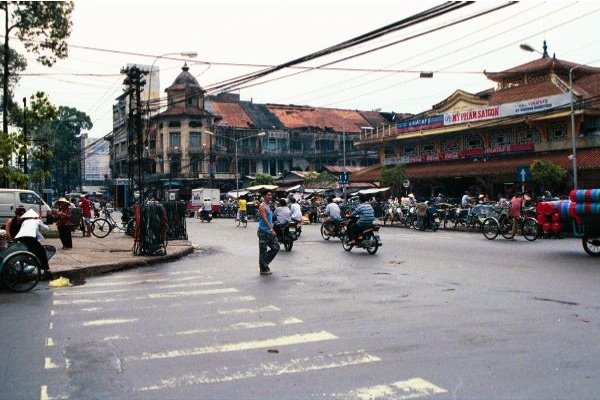
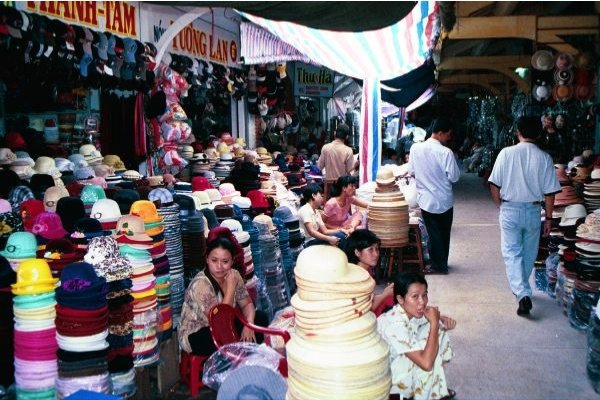
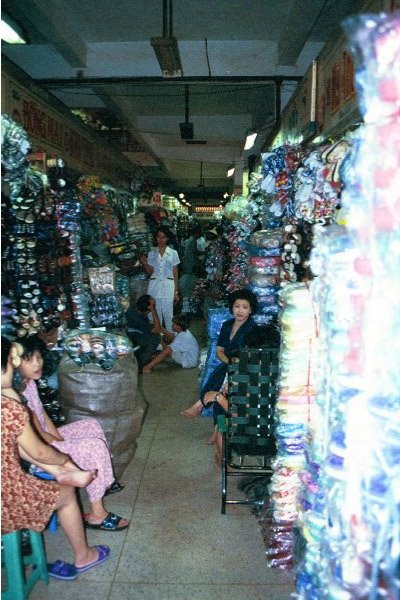
These photos show the Saigon Central Market and are fairly typical of the way most Saigon residents shop. Very crowded, narrow aisles with goods of all types piled everywhere. Chaotic to the uninitiated and kind of reminiscent of other crowded markets I have visited in places like Tijuana Mexico, Xiushui Jie (Silk Alley) in Beijing before the authorities and commercial interests turned it into something more respectable, Itaewon Seoul Korea and Akihabara Tokyo, the center of the universe for all things electronic.

Friday, August 25, 2006

Cao Dai


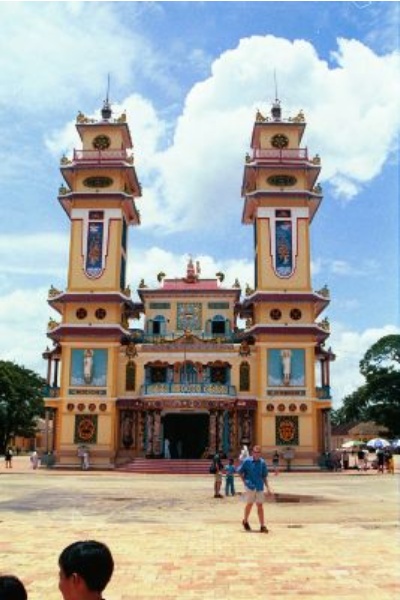
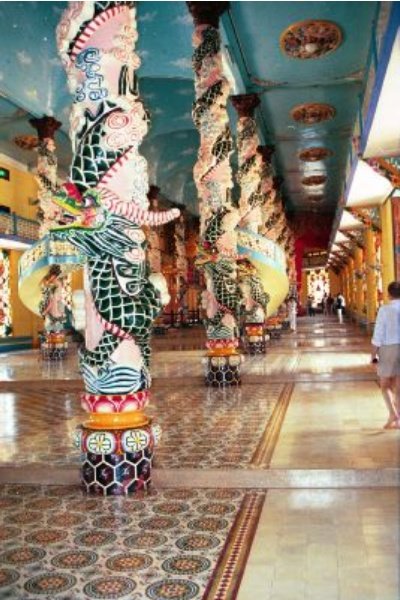
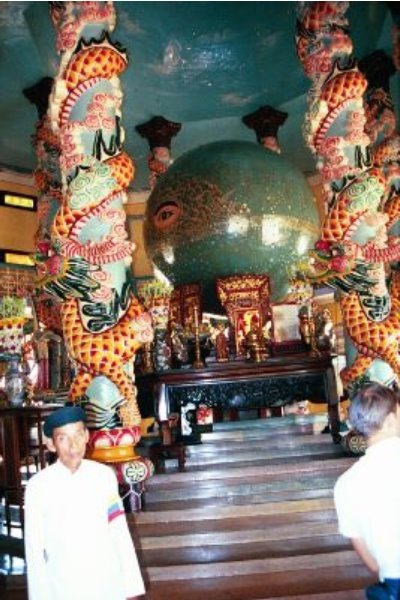
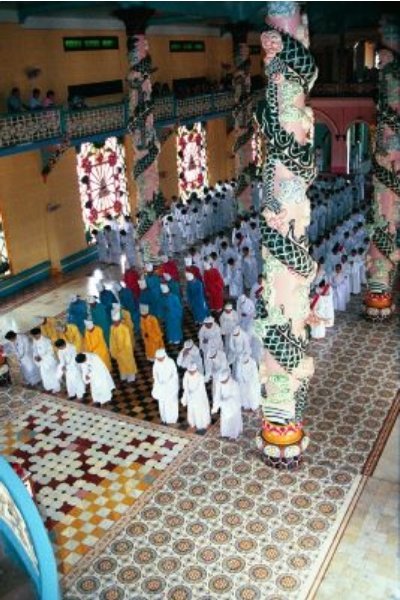
If you spend any time on travel logs of people who have been to Vietnam as tourists you will find reference to the Cao Dai Temple. Cao Dai a combination of Christianity, Buddhism, Islam, Confucianism, Hinduism, Geniism, and Taoism.

I was told that during the war, neither the VC/NVA nor the South Vietnamese or Americans bothered Cao Dai to any great extent. To those of you who were not there, that may not seem significant but it was. They were located about 90KM north/east of Saigon right in the path of the infiltration of the Communist forces. Right next door to the infamous Cu Chi Tunnels. In other words, in the middle of the war.

You will find essentially the same pictures you see here on countless websites just as you see the Eiffel Tower on most all picture logs of Paris. There is a reason for that and if you go to Vietnam you need to visit Cao Dai to see why that is for yourself.

I was in and around Tay Ninh towards the end of my war year in Vietnam but not unexpectedly had no idea of the existence of this wondrous place. Just as well. At 20 I would not have known how to begin to appreciate it as I do now.

Cu Chi Tunnels


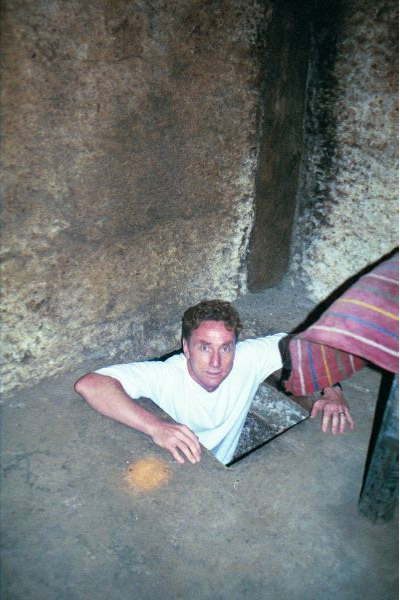
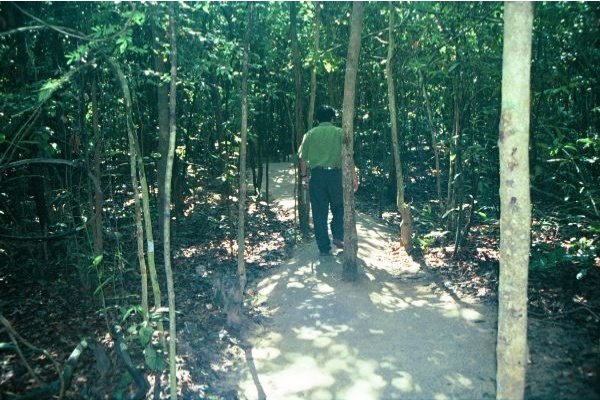
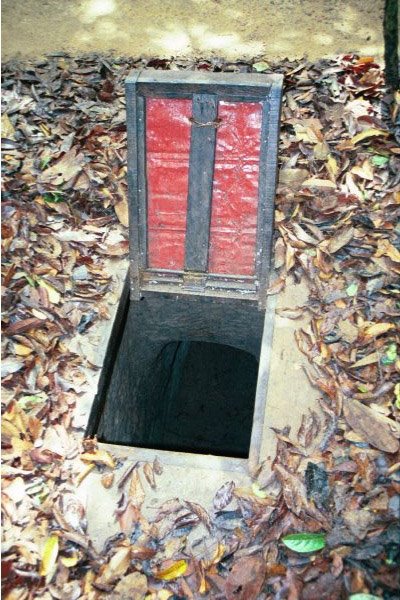
Most all who visit Saigon will as well visit the Cu Chi Tunnels located about 45 miles southeast of Saigon. Seventy-five miles of underground honeycomb tunnels that during the war were an underground city unto itself sheltering hundreds of VC fighters and in some cases their families.

Really an amazing feat of personal engineering. The predecessors to the Viet Cong, the Viet Minh who fought the French throughout the 1950’s, began digging the tunnels in 1948, mostly by hand sometimes no more than two meters a day.

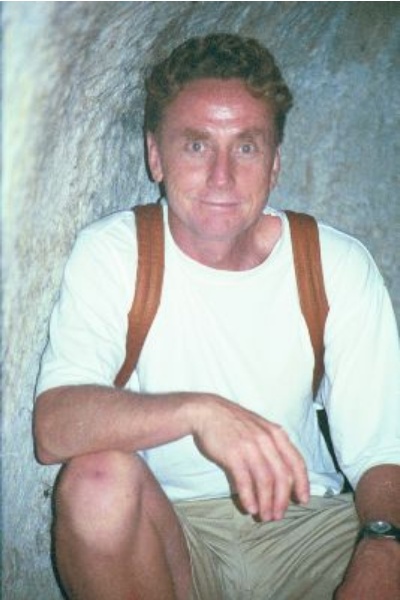
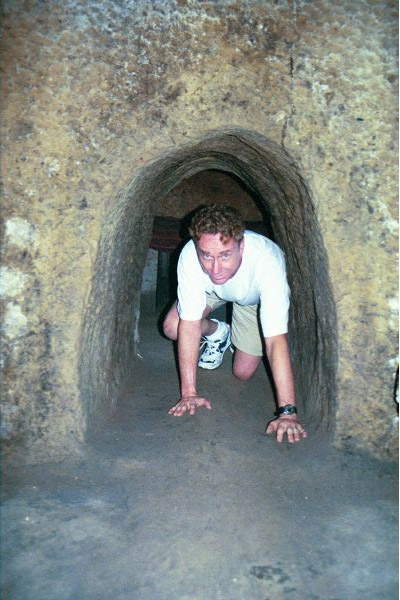
Now as with so much else in Vietnam, Cu Chi Tunnels are a tourist destination where one can do as you see me doing, crawling, literately through sections of the tunnels and, if you wish, shoot an AK47 assault rifle for $1 a bullet. And, of course, buy all the requisite souvenirs including “authentic” GI Zippo lighters supposedly from the war but in reality, fresh off the production line in some Saigon back alley shop.

Thursday, August 24, 2006

Reunification Express


Most westerners who visit Vietnam will travel north and south by air however for the more adventurous among you there is the Reunification Express train. Wondering about the name? Think about it in the context of the train resuming service after the end of the war.

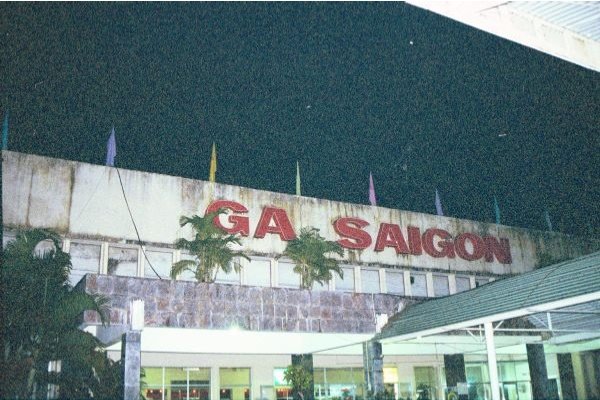
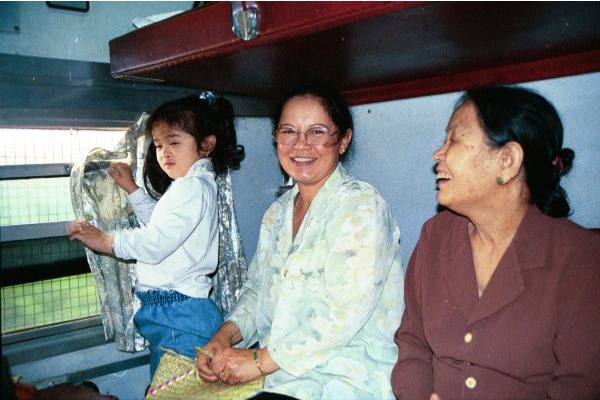
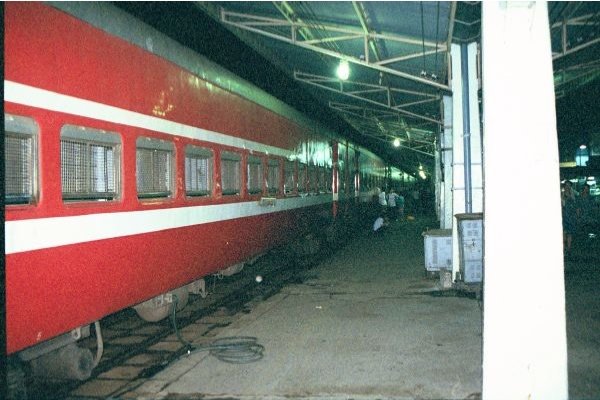
These pictures show the Saigon rail station (“Ga”) as well as my traveling companions, Mrs. Nguyen and her daughter Jennifer of San Diego California, traveling with Grandma who lives in Saigon to visit relatives in the north.

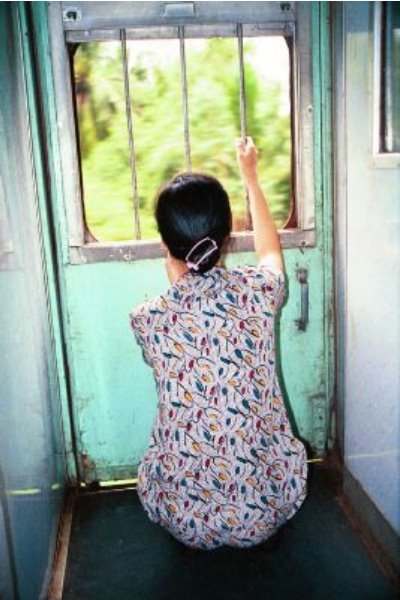
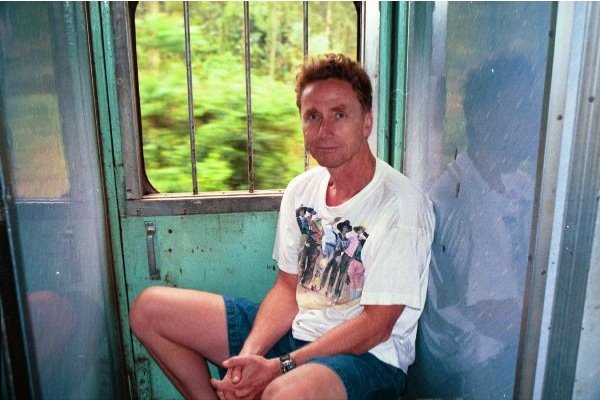
I spent much of the morning prior to pulling into Da Nang, sitting on a bucket between cars watching the Vietnamese countryside pass by as did the woman you see sitting opposite me. A wonderful way to see the country much of which would be difficult if not impossible to reach were it not for the train.

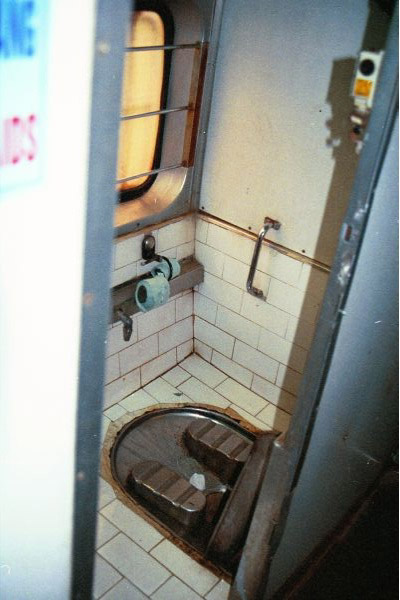
This was an over night trip from Saigon to Da Nang. By western standards the accommodations may seem a bit primitive but hey, you want adventure don’t you? Just bring snacks and water and you’ll be fine.

Wednesday, August 23, 2006

LZ's Suzie and Pedro


So much of my time in Vietnam is clear in my mind even after all these years. Things like that imprint on you.

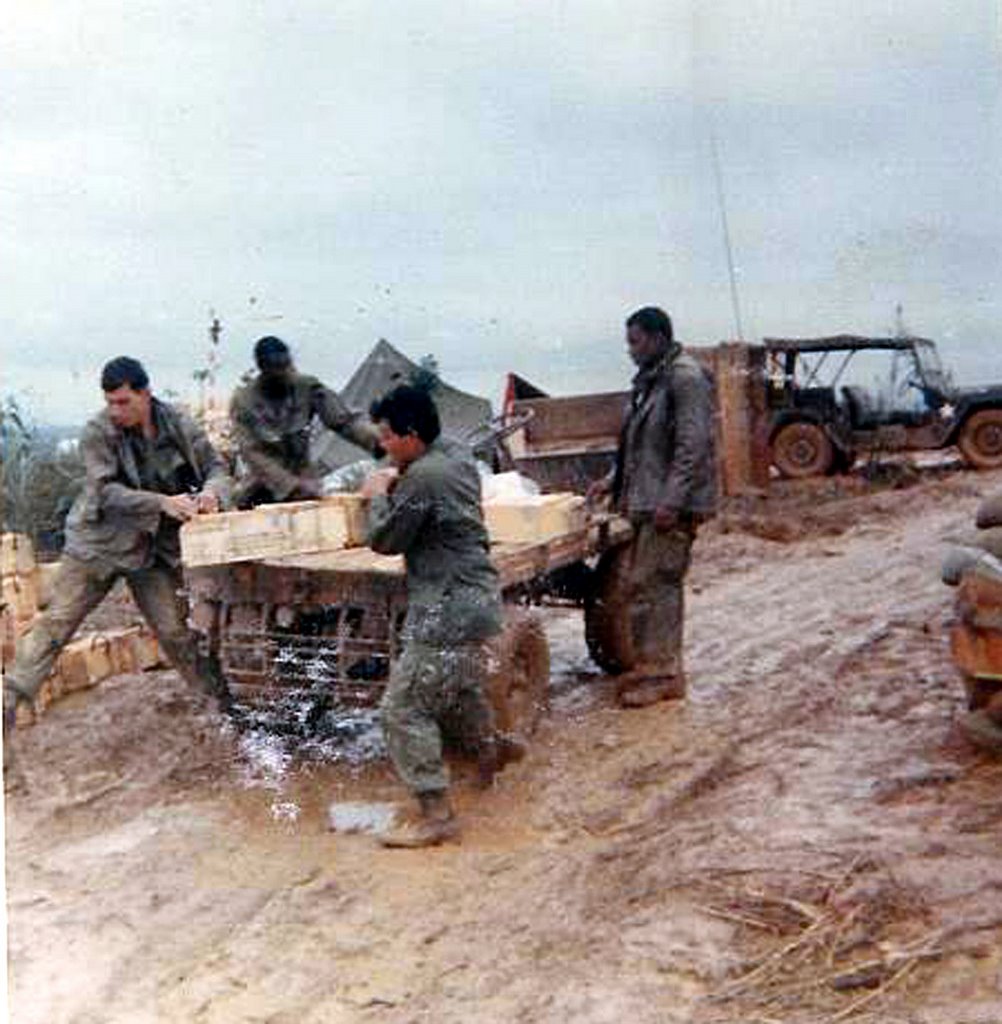
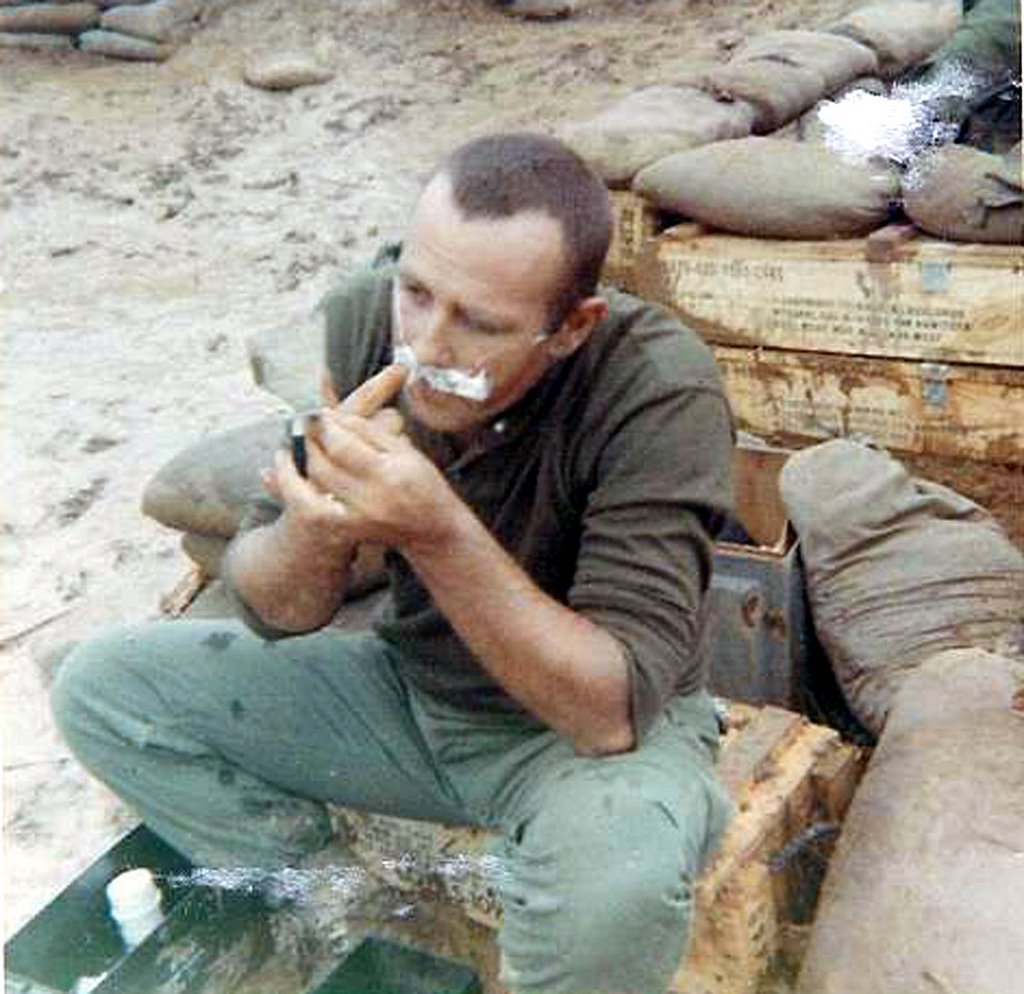
Two such places were our time on LZ’s Suzie and Pedro. Rain, mud, mold and an occasional mortar or rocket attack. These photos taken around the battery position portray both LZ's well.

Depressing, wet, at times scary.

20th Birthday


I turned 20 in February in Vietnam and these photos show the celebration with Ron, Steve, me, Tom and the cake some 6 feet under ground in a bunker on LZ Suzie. We were there longer than any other LZ the entire year; a full month, with cold wet rain the rule every day and night. Mud and mold everywhere to the point that we even stopped wearing underwear and socks not bothering to unlace our soaked boots the last two weeks or so. Easily the worst month of my life day for day.

China Beach


China Beach was made famous, at least in the US, well after the war. There was a popular TV show by the same name which aired in the late 80’s.

Situated near Da Nang, these photos show me there some 31 years apart, amazingly almost in the same pose. As with the Hue Citadel photos (see Tet 1968: The Citadel post), a complete coincidence I did not intend nor discover until after I returned and began going through the pictures from both trips.

Da Nang


Da Nang was a focal point during the war, an area that included one of the US’s largest airbases. I went through there a number of times usually trading Air Force personnel war souvenirs such as NVA flags, helmets, knives, etc., which I could get, for things like beer, ice cream, PSP (perforated steel plating used in runways, we would use as overhead bunker cover), which we would not otherwise get were it not for the trades.

These pictures show the view from my initial room (see Hoi An post) and the street below and in the one case, to the river beyond. Not a pretty city such as Hoi An but one of the larger and certainly important ones in central Vietnam

Marble Mountain Carvers


During the war Marble Mountain was in enemy hands contested but never completely taken by the US and South Vietnamese forces. Now the town at the base of the mountain is filled with shops as you see here, famous for their intricate marble carvings.

The steps I am sitting on lead up into the mountain which is much like a giant cave inside.

Thursday, August 10, 2006

Hueys


Being in the 1st Cav in Vietnam meant you flew most everywhere you went. Being in the Army meant that whatever it was you were formally trained to do, in my case 13A10 (my MOS “Military Occupational Specialty” or “job” in civilian speak) artillery, was most likely not what you would do.

I spent some time in the battery but most all of that was in Exec Post checking fire mission data. Later I was near the helicopter units and as a result was able to volunteer to fly as a door gunner on Hueys. Mostly “dust off” (medivac) and mortar patrol stuff (fly on station waiting to be called to shoot at targets.) So, trained artillery but was able to fly as a door gunner without training. Go figure.

These pictures are taken in the Quang Tri area where I did all my flying. That’s Camp Evans at the bottom. Notice all the helicopters. The rest are taken in the I Corp area and show how beautiful the country is, even more so today now that much of the cratering has filled in.

The shot showing my boots with the ground below gives a good idea of the spectacular vantage point the gunners have on a gunship.

Sunday, August 06, 2006

Chinooks


No Vietnam era 1st Cav solider blog or personal web page addressing Vietnam would be complete unless it includes photos of Chinooks. When it comes to transportation they were to us what horses were to 1st Cavalry troops when the division was formed in 1921 and what armor is for today’s 1st Cavalry soldiers. Chinooks were what we rode to battle.

These photos show what they looked like at work including one of my personal favorites, a picture I took within a few feet of one lifting off from LZ Pedro in February 1968. Even today some 30+ years later I can hear the “whomp, whomp, whomp” sound as the blades beat the air and feel the incredible downdraft as it lifted up and away.

Quan Ba Tho Cafe, Da Nang


One of my favorite 1999 memories is of the Quan Ba Tho Café in Da Nang. There I spent a couple of hours with my guide Phuc and our two pedicab drivers, Cuoung and Otrang eating the largest grilled shrimp I have ever seen, drinking whiskey and beer, all for the unbelievable price of $12US.

You also see our hostess, the café owner, along with her young son who was none too pleased to be sitting in my lap in the pedicab.


Saturday, August 05, 2006

Hoi An


Hoi An. I didn’t even know it existed.

Situated near Da Nang, it is a beautiful place similar to the artsy towns that dot both coasts in the US. From what I was told it was largely untouched by the war, which is amazing if true given its proximity to Da Nang.

As an aside, I was originally supposed to stay in Da Nang and in fact checked into a hotel there. However after discovering Hoi An, I checked myself out telling the desk clerk that I would meet my guide the next morning in the lobby, and moved to a small hotel in Hoi An. With that done I began to explore returning to my hotel to shower and change before dinner.

Much to my surprise there was my very worried looking guide along with three police all of whom immediately wanted to know why I had moved. As it turns out, my passport had been registered with the police (standard policy for westerners) at the previous hotel with an indication that I would be staying the night. When I abruptly changed my itinerary, they went looking for Phuc and then as a group, for me. Changing plans like that without the authorities knowing in advance is frowned upon.

These pictures show only a portion of the beauty. Narrow alleys leading to unexpected surprises such as this café where I sat outside enjoying a delicious lunch of fish, rice with a glass of wine (from where I have no idea. All the better on this trip of discovery.) Watching the sun go down across the Bon River with the fishing fleet at anchor.

Wonderfully peaceful.

Road to Quang Tri


Da Nang and definitely Hoi An were well worth the trip to the middle county but my visit there was about getting to Quang Tri Province. This was where I spent most of my time during the war and where I would find whatever information was available regarding Dolly (see "Dolly" post).

These pictures show some of the trip to Dong Ha including the Hoi Van Pass and Lang Co Beach, unfortunately, no doubt, headed towards Maui style development at some point in the future.

Friday, August 04, 2006

Dong Ha


I spent one night in Dong Ha, which is decidedly not a western tourist destination. However it was convenient for the next day drive east on the infamous Route 9 towards the Laotian boarder and my visit to Khe Sahn.

These pictures include a view of the main street in Dong Ha taken from my hotel window, along with one in the room and the courtyard below.

It was, by central Vietnam standards, a very nice hotel however most westerners would probably be a bit uncomfortable. No sheets on the bed and large numbers of mosquitoes which were controlled to a point by a contingent of geckos hanging out in the shower, along with a can of bug spray the desk clerk gave me when I checked in.

Finally, around 10 PM an amplified Vietnamese voice began screaming God only knows what. There were megaphone speakers on poles near the hotel so the local Communist government could preach to the people. My guide Phuc explained the next morning that was simply the standard propaganda and that likely few other than me even bothered to listen. I couldn’t understand a word of it.

Wednesday, August 02, 2006

I Corp Area


Thirty-one years ago these scenes would either never have happened (me in this woman’s home near what was LZ Jane) or I would have been too scared to have appreciated the beauty.

Question for any Marines who may be reading this. What is the name of the pile of rocks silhouetted by the sun? (Hint: Reread the last sentence.)

The “Rock Pile” just east of Khe Sahn near Con Tien. Semper Fi

Monday, July 24, 2006

Quang Tri


Quang Tri is just inland from the South China Sea and a few miles south of the DMZ in I Corp. Once the division moved up there from An Khe, we spent a considerable amount of time out on fire bases called “Suzie”, “Pedro” and “Jane” as you see pictured here. In 1999 I went back and with my guide and the help of a man who had been a VC mortar commander during the war, found what had been LZ (Landing Zone) Jane.

I can’t honestly say things looked familiar or actually that I could prove it was Jane. It “felt” like Jane but that could be because I wanted it to. Nothing of my war year was recognizable because my time was either in the field or in an area the Army built for its own use. No time in the cities.

However at worst these “before” (1968) and “after” (1999) pictures were taken within a few miles of each other if not on the exact spot, which my ex-VC new friend insisted was the case (he said he mortared us on more than one occasion.) And, of course, the pictures of me are exactly that.

Note the pocked marked building. This was a school house in Quang Tri City. Two years after the 1st Cav was ordered south, the VC/NVA overran the area and this building is an example of how bad things became. Really sad.


Friday, July 21, 2006

Khe Sahn


The battle for Khe Sahn was interesting because it ended a non event relative to what might have been. Situated near the Laotian boarder, a major route south for the North Vietnamese Army, it became a “must win” symbol for both sides.

The 26th Marines and select Army Special Forces units such as those at Lang Vei had endured and returned a tremendous amount of punishment centered on what was to become a historic remote outpost in the most north/eastern corner of the country. In the end over 40,000 NVA/VC facing 15,000 1st Cav and Marines. Their numbers against our firepower. Beginning in mid March 1968 ending in mid April, the final toll for the 1st Cav was 59 KIA, 250 wounded and 5 MIA (this did not include Marine or South Vietnamese causalities) against a confirmed 638 NVA/VC killed. The expected decisive battle never came, likely because the other side realized they would be beaten. As suddenly as it began it was over and we were off to air assault A Shau Valley.

The accompanying pictures of the kids are at a school within 5 km of the former firebase. Pictured with me is one who took me the last 200 or so yards to the very spot I had been some 27 years before he was born. This is why I came. All in contrast to the dark days of 1968 when we were all digging in for whatever lay ahead. Replace dark memories of soldiers with color images of kids. How great is that?

And then in 1999 I return to a pastoral landscape devoid of everything. No indication of the siege the Marines endured, our positions, nothing. It’s as if we had never been there and I can't think of a better legacy.

Wednesday, July 19, 2006

Tet 1968: The Citadel


Another must stop for anyone seeing more than just Saigon and Hanoi is Hue, the ancient imperial capital of Vietnam. I was interested for that reason and because I was there during Tet 1968. The palace is now a ruin, in part due to normal wear and tear over the centuries, WW2 and the fighting during the 1968 Tet Offensive. The Communists used it as a base and as a result the grounds suffered immensely due to the fighting.

Anyone familiar with South East Asia and/or part of Georgia for that matter will know about Cicada, the grasshopper like bug that emerges each 17 years to live a short but incredibly loud life. They were on the Citadel grounds when I was there and there is no way I can over state how loud they were. Loud enough to cause me to cover my ears.
Note the two pictures of the Citadel; one with a flag and one without. I took both some 31 years apart although quite by accident. I found the 1968 photo among my war pictures only after returning from the 1999 trip . Pure serendipity. Or does it qualify as deja vu if I was actually there??

Perfume River


These pictures were taken on the Perfume River near the Citadel. Those people you see on the boat, and countless others like them, live their entire lives on the river on those boats. I cannot even begin to imagine what that would be like.

Also at the river’s edge is the Thieu Mu Pagoda, a beautiful structure and grounds about 5km from Hue City. Built in 1601 and heavily damaged during WW2, it is still a major tourist attraction today.

Reunification Express to Hanoi from Hue

Back on the train, this time from Hue to Hanoi overnight and as before, bring what you want to eat and drink and minimize visits to the “facilities” and you’ll be fine. A bit warm and humid but overall an overnight train ride just like anywhere else.

There is an interesting story associated with this part of the trip from Hue to Hanoi. When I boarded the train I put my bag under the bottom bunk. Shortly thereafter I was joined by a middle aged Vietnamese couple with whom I would share the compartment. They attempted to put their bag under the bunk as I had done but for some reason it wouldn’t fit. So I got down on my hands and knees reaching under the bunk to see what was stopping it.

My head was turned toward the couple as I felt under the bunk. Way back in the corner I grabbed something that, to me, felt like what I think a dead woman’s leg would feel like. It was fleshy and cool to the touch and felt as though it was wrapped in nylon (hence, dead woman’s leg.) I grabbed hold of it pulling it out from under the bunk and as it emerged, I saw a look of horror come across the faces of my traveling companions. What I had was not a leg but a 6 foot cobra snake wrapped in a mosquito net.

The snake belonged to a conductor who was smuggling it north from Saigon. Cobra meat is an illegal delicacy with many men drinking the snake’s blood believing it to be an aphrodisiac. However not for me. One bite and I would have been toast. How ironic to have survived the war only to die decades later on that train.

Hanoi Street Life


Unlike many cities I have visited around the world, in Hanoi my pictures were more often street scenes involving people in contrast to the structure pictures I would take in Europe and other parts of Asia. It's not that I don’t find Hanoi’s buildings interesting because I do but the people in the streets IS Hanoi. I can think of no other city where the street life interests me as much as do the buildings other than New York.

Tuesday, July 18, 2006

Uncle Ho

Ho Chi Minh was modern North Vietnam’s George Washington while at the same time a lesser Hitler to those in the south. Now long lines of tourists’ line up to tour his simple house and mausoleum where he lies in view in a fashion similar to Stalin’s Moscow tomb. Indeed he is transported once a year back to Moscow for a “freshening” before being placed back on display.

Moving through the line past his body is a somber experience however not because all necessarily revere the man. Instead it is because the military guards tolerate no disrespect, intended or otherwise.

My feelings about Ho Chi Minh notwithstanding, it was a significant moment for me, passing within feet of the body of the man who commanded the millions of troops who had directly and indirectly affected so many of my friends and family; indeed all Americans of that era.

What do most Vietnamese think of him today? There are many answers to that depending on who you talk to and under what circumstances you ask. Publicly, he is still praised although much less so in the south than in the north but privately, he is mostly a non entity; an artifact of an age now past as the Vietnamese rush to modernize, well on their way to a Capitalistic future “Uncle Ho” would have done all he could to prevent.

French Hanoi and the Communist Capitalists


What surprised me most about Hanoi was the French architectural influence. If you ever saw news footage taken in and around the city during the bombing, which occurred later in the war, what you saw was generally in black and white and appeared very bleak. Certainly nothing pretty, just simple utilitarian functional.

No doubt it was bleak given the pounding the city was subjected to but visiting years later it was clear that Hanoi once was and could be again, quite beautiful just as are Paris, Washington, Venice and many of the old Europe cities. The infrastructure is poor with much to be done but you don’t have to look far below the surface to see what could be.

Finally I was also struck by the commerce occurring on the sidewalk, such as this barber. Not so deep down, these Communists are true Capitalists.

Monday, July 17, 2006

Hanoi Hilton


No trip to Hanoi would be complete without a visit to the infamous “Hanoi Hilton” where US POW’s were held under brutal conditions for years. There are no words to express how walking through the prison makes one feel and it would be an insult to all those who were held there to say “I know what it must have been like.” I don’t and never will anymore than I can begin to fathom the pain and suffering of those who were held in the Soviet Gulag or any of the Nazi extermination camps.

Dolly


Many times I would drive my jeep through Quang Tri Village on my way to battalion and when I did I would often stop in the village to buy a Coke from some of the kids. It was actually “our” Coke (they had “our” beer as well) but before we could get it in the field it found its way, along with a lot of other stuff, out of the hands of the military onto the black market. In most cases I was not OK with that but when it came to buying Cokes and beer from the locals it seemed fine. For many that was their only source of income.

The 13 year old girl you see here called herself Dolly. As the smile on her face should tell you, she was a sweetheart and had a great and positive outlook for one so young living under such poor conditions. While we were all over the area during the day the VC controlled her village at night and she and all the others had to be very careful about fraternizing too much with the Americans.

One day I stopped to buy a Coke from Dolly but this time instead of her usual smiling self, she was very tense and nervous, continually looking around as we talked. She finally told me the road ahead had been mined and she did not want me driving further. However if I turned around at that point and someone was watching us talk, they would probably conclude she had helped me. And, of course, someone else could easily hit the mine.

I thanked her and told her to go on doing what she always did and that I would take care of things. She walked away and I got back in my jeep and began to crank the engine purposely turning the key off just before it started. I did this a few times more and then got out opening the hood making a show of looking at the engine. Finally I got on my radio and called battalion telling them about the mines. With that done I waited until help arrived and after playing with the engine some more, we started and moved on after we knew for certain the road had been cleared.

I took these pictures back with me in 1999 hoping to find out something about Dolly however not unexpectedly I found nothing. The VC/NVA took over the area in 1972 and it is very likely Dolly was killed in what was tremendous fighting for control of Quang Tri. Or maybe she lived and continues to live today.

I will never know.

Steven Francis Dolim, Jr.


This is not a war story. It is about Vietnam its people and the 31 years separating my two visits to the country. However there is one war death I must discuss.

Steve would not be happy with his full name being used as the title of this post. As proud as he was of his family and heritage he did not see himself publicly as a “Steven” and certainly not as a “Francis”. He was to be Steve, nothing more. But I would tell all his story if I could; every minute detail of his short 20 years.

Steve was born in Maui the only son of Portuguese descent Hawaiians who in the mid 50’s moved to Southern California for better jobs. We first met in high school when I pledged and made a club Steve was already in. We became great friends and afterward, he told me the truth about my pledging. I had only one “ding” (no vote), making the club easily (three dings and you didn’t get in.) That one vote came from Steve.

Steve was a tough guy with a big heart. He could and did handle himself well in the inevitable high school fights but would also do whatever he could to help his friends. He also stuttered, at times so bad you didn’t think he would be able to complete his thought. But that was just a part of Steve and after awhile, not something I noticed.

We went off to Long Beach City College after high school, in part because we would not have been able to get in anywhere else given our grades, in part because we assumed we wanted our student deferments due to the war and in part because we didn’t know what else to do.

One day in the spring of our freshman year, I ran into Steve during a break and after talking awhile he said he wasn’t doing well in school and planned to join the Marines. I told him he’d be crazy to do that given the war but since I wasn’t any more enthused about school than him, I would quit too and we’d find something to join. We talked awhile longer and as we did Ron, Tom and ultimately Dave, all friends from high school, in Ron’s case junior high and for Tom and I, 6th grade, joined us deciding on the spot to quit as well so we could all join “something”. The question was, join what?

The Air Force and Navy were out because they were not rugged enough for Steve and because they were four years. At least we had some small nano particle of sense that told us four years was too long. That left the Army for three years as long as, we all agreed, we went into one of the combat arms.

So with not much more deliberation than that including no discussion with our parents, the five of went down to a recruiter and signed up on the delayed enlistment program so we could at least complete the one year of college before leaving June 27, 1967 for basic training. On December 7 of that year four of us (Dave came over a few months later) were in Vietnam and six months to the day after, Steve was dead, the victim of a B40 rocket attack that took off the side of his face as he lay sleeping on the ground.

It is now 32 years later and I can honestly say Steve is as present in my mind as he was then. Each July 4th I visit his grave along with that of his mother who died of brain cancer at 50, thinking about the seemingly random gyroscope turns that is all our lives. That only comes with age. When we were 20 we were invincible, indestructible and would live forever. There was nothing random about it; we could handle anything and were in control until on June the 7th, 1967 we discovered we weren’t. All of us that is except Steve who will forever remain the boy/man we all had been the day before.

As strange as it may seem, I no longer have regrets about Steve’s death and do not blame the VC or NVA soldier who fired the rocket that killed him that June night. Whoever that was was doing no more than we and may be somewhere today missing some long dead friend, also never forgotten.

Commandos forever Steve!

Sunday, July 16, 2006

Going Home


32 years! What a long, strange trip from naïve 19 year-old to, well, I suppose a still naïve 50 year-old. And what did I learn in all that time? I learned that:
• In many cases what appears to be probably is not.
• What most believe about something they have not experienced will be mostly wrong.
• Initial impressions are just that and bear little relationship to what will be in the long run.
• That looking for something long lost is not the same as finding it.
• That living in regret of the past gets in the way of moving into the future.

I would not trade either of my times in Vietnam even though the cost of the first visit was so great both during and after the war. Looking back I see how much the war year made me who I am, both the good and the bad. To say now I wish that had not happened is to say I wish I had become something other than what I am and while there is always room for improvement I cannot do that.

I have “closure” not with the war but of greater importance the country and with one exception, the people; both of which mean more to me than I can ever explain to others. The one thing I was not able to do was to learn the fate of Dolly and in that regard, as the U2 song says, I still haven't found what I was looking for.